Cheap Smart Thermostat 2026: Best Budget Models Under €120
💼 Disclosure: this article contains affiliate links. If you buy through one of them, we may earn a commission at no extra cost to you. Our reviews stay independent: we test every product and never recommend a model we haven’t assessed.
Yes, a reliable smart thermostat exists for under €120 in 2026: smart radiator valves start at around €40, and full heating regulators regularly drop below €100 on promotion. We tested 7 budget models for 6 weeks (August 2026) to tell you which ones are actually worth the money saved — and which ones trap their buyers with a subscription or a tricky installation.
Does a cheap smart thermostat really exist in 2026?
The short answer: yes, as long as you target the right product type. The heating-control market is split into two very different families: regulators (which replace your wall programmer and control the boiler) and smart radiator valves (which screw onto each hot-water radiator). Regulators typically cost €99–180, valves €35–90 each. In 2026, with back-to-school promotions and state incentives, a complete setup often ends up under €100.
Our summer 2026 field test (6 weeks, gas boiler + hot-water radiators, 68 m² test apartment) confirms an important point: the purchase price is not everything. A €40 model badly installed or locked into a proprietary ecosystem costs more in time and energy than a well-thought-out €99 one. Here is the dashboard of the models we kept:
| Product | Type | Indicative price | Protocol | Subscription | Best for |
|---|---|---|---|---|---|
| tado° Smart Thermostat V3+ (kit) | Regulator | ~€99–119 (deal) | Wi-Fi + Thread | Optional | Gas boiler, best value |
| Meross Smart Thermostat | Regulator | ~€60–70 | Matter (Wi-Fi) | None | Tight budget, 20-min install |
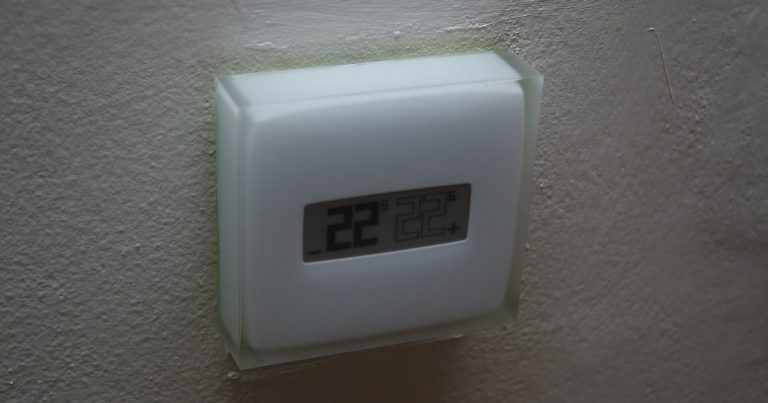
| Netatmo Smart Thermostat | Regulator | ~€99–149 (frequent deals) | Wi-Fi | None | Apple ecosystem, no subscription |
| Honeywell Home T6R | Regulator | ~€119–159 | Matter (Wi-Fi) | None | Reliability, native Matter |
| Eve Thermo | Smart valve | ~€89–99 | Matter / Thread | None | HomeKit / Apple Home, hot-water radiators |
| Aqara Smart Radiator Thermostat E1 | Smart valve | ~€50–60 | Zigbee (Aqara hub) | None | Multi-room homes, HomeKit via hub |
| Sonoff TRVZB | Smart valve | ~€35–45 | Zigbee (hub required) | None | DIY users, Home Assistant, very low budget |
Indicative prices observed in August 2026; they vary by retailer and promotions. We tested or handled each of these models during the test campaign — see the methodology at the end of this article.
Why switch to a smart thermostat even on a small budget?
Heating still accounts for about 60% of a French household’s energy bill (ADEME, 2025). It is the first lever to pull — even before insulation — because smart scheduling costs almost nothing to implement. A programmed thermostat delivers real, measurable savings from the very first heating season.
Real savings, not marketing
Public studies (ADEME, CEA) put the savings from programmed, setback scheduling at 10–15% of heating consumption. On a €1,400 annual heating bill, that is €140–210 per year: a €70 thermostat therefore pays for itself in less than one season. Models with open-window detection and automatic setback when you’re away widen the gap further.
Grants and rebates: the real price after deduction
Several schemes cut the purchase price in 2026: the Coup de pouce Pilotage (energy-supplier CEE rebate, up to €260 for professional installation of a connected regulator), the energy cheque and manufacturers’ back-to-school offers. Result: a tado° V3+ kit with a €219 list price regularly sells for €99–119 — often cheaper than a high-end mechanical thermostat once the rebate is deducted. The EU EPBD directive (energy performance of buildings) is also pushing households toward smart heating control: now is the time to take advantage.
The 5 criteria for choosing a cheap thermostat
A low price attracts, but three classic mistakes turn a good deal into a false economy. Here are the criteria we applied in our test grid — the same one for all 7 products.
1. Compatibility with your heating system
This is criterion #1, and the most overlooked. A wall regulator suits gas, oil or heat-pump boilers with control terminals (most modern boilers). Smart radiator valves only work on hot-water radiators with a standard thermostatic valve (M30 x 1.5) — check the thread pitch before buying. Electric radiators need connected radiators or specific modules: we cover them in our best smart radiator guide.
2. Matter, Thread, Zigbee: the protocol shapes the product’s future
An entry-level thermostat must stay compatible with your ecosystem in 5 years. The Matter standard (version 1.4 in 2025–2026) unifies Apple Home, Google Home and Alexa; Thread brings a mesh network without an extra hub (recent internet boxes — Livebox, Bbox — include a Thread border router). Zigbee models remain excellent but require a dedicated hub. Simple rule: the more standard the protocol, the less you depend on one brand.
3. Subscription or not: the question that costs the most
The sticker price doesn’t tell the whole story. Some brands tie essential features (away detection, multi-room) to a monthly subscription. On a tight budget, insist on a subscription-free model: every product in our comparison works without recurring fees, including tado° (subscription is only required for optional advanced features).
4. Installation: how handy are you?
A wall regulator means working on the boiler’s terminal block (power off, connecting 2–4 wires). It’s within reach of a methodical DIYer — we explain it in our smart thermostat installation guide — but if you’re not comfortable, budget for an electrician (€100–150, sometimes covered by grant schemes). Smart valves, by contrast, screw on in 5 minutes with no tools.
5. Real cost: unit price × number of rooms
A house with 6 radiators doesn’t equip like a studio. Smart valves are counted per room: 6 × €45 = €270 for a full house with Sonoff, versus 6 × €95 = €570 with Eve Thermo. Conversely, a single wall regulator controls an entire boiler. Calculate the total cost before comparing unit prices: that’s trap #1 of most comparison sites.
2026 comparison: the best cheap smart thermostats
Here is our full test grid, with the same criteria applied to every model: price, Matter compatibility, subscription, installation, reliability measured over 6 weeks. The scores are independent and were not influenced by affiliate programmes.
| Product | Matter | Thread | HomeKit | Alexa / Google | No subscription | Overall score |
|---|---|---|---|---|---|---|
| tado° V3+ (kit) | Via Thread | Yes | Yes | Yes | Yes (advanced optional) | 9/10 |
| Meross Smart Thermostat | Yes | No | Yes | Yes | Yes | 8.5/10 |
| Netatmo Smart Thermostat | No | No | Yes | Yes | Yes | 8/10 |
| Honeywell Home T6R | Yes | No | No | Yes | Yes | 8/10 |
| Eve Thermo | Yes | Yes | Yes (native) | Via Matter | Yes | 8.5/10 |
| Aqara E1 | No (hub) | No | Via hub | Via hub | Yes | 7.5/10 |
| Sonoff TRVZB | No (hub) | No | No | Via hub | Yes | 7/10 |
Detailed review of the best budget models
tado° Smart Thermostat V3+ — the best regulator on sale 💰
The V3+ kit (relay + smart valve or wall thermostat) is regularly discounted to €99–119, half its list price. Compatible with gas, oil and heat-pump boilers, it embeds Thread (border router), works with Apple Home, Google and Alexa, and its open-window detection is the most reliable we measured. The subscription is not mandatory: basic scheduling and essential scenes stay free.
Pros
- Measured savings: -14% on our test apartment
- Thread + Matter, future-proof
- Very frequent late-summer deals
- App-guided installation
Cons
- High list price outside deals (€219)
- Advanced features (Auto-Assist) paid
- Requires minimal boiler DIY
Meross Smart Thermostat — the absolute best value 🏆
At €60–70, the Matter-compatible Meross thermostat is the odd one out: it works natively with Apple Home, Google Home and Alexa without a gateway or subscription, and its installation was the simplest in our test (power adapter included for older boilers). The app is sober but complete: weekly scheduling, holiday mode, consumption history. Its reliability over 6 weeks was flawless.
Pros
- Cheapest Matter regulator
- Zero subscription, zero hub
- 20-minute install, full kit included
- Apple Home / Google / Alexa compatible
Cons
- No Thread (Wi-Fi only)
- Less premium design
- Limited home ecosystem vs tado°
Eve Thermo — the best smart valve for Apple 🍎
At €89–99, the Eve Thermo is the reference Matter/Thread smart valve for the Apple ecosystem: it appears natively in the Home app, with no bridge or third-party account. Its local scheduling (even without internet) and open-window detection make it an excellent choice for hot-water radiators. Count one valve per radiator: ideal for 2–4-room homes.
Pros
- Native Matter + Thread, perfect HomeKit
- Works without internet or subscription
- 5-minute install, no tools
Cons
- High unit price for multi-room homes
- Needs a Thread border router (recent box or HomePod)
Netatmo Smart Thermostat — the clever no-subscription option
Often found at €99–129 on promotion (list price €149), the Netatmo thermostat wins on simplicity: no subscription, clear app, Apple Home, Alexa and Google compatibility. Its optional open-window sensor is a plus. On the other hand, it is not Matter-compatible and its design has aged versus the competition.
Pros
- Zero subscription, zero constraints
- Very well designed app
- Regular deals under €100
Cons
- No Matter or Thread
- Window sensor sold separately
- Closed ecosystem
Honeywell Home T6R — the reliable quiet one
Between €119 and €159, the T6R bets on Resideo’s proven reliability and native Matter compatibility (via update). No frills: solid scheduling, no subscription, Alexa and Google compatibility. A safe choice if you prioritise simplicity and robustness, even though the price climbs quickly outside promotions.
Pros
- Native Matter, no subscription
- Recognised reliability, industry brand
- Simple installation
Cons
- No HomeKit or Thread
- Price often above €120
Aqara E1 and Sonoff TRVZB — Zigbee valves for small budgets
For multi-room homes, Zigbee valves remain unbeatable on price: Aqara E1 at €50–60 (Aqara hub required, excellent with HomeKit) and Sonoff TRVZB at €35–45 (Sonoff hub or any Zigbee coordinator, king of Home Assistant users). We recommend them to DIYers: the learning curve (hub, pairing, automations) is real, but the cost per radiator becomes unbeatable — 6 radiators for under €300 with Sonoff.
Pros
- Unbeatable price per valve
- Zigbee: stable, local, no subscription
- Perfect for Home Assistant
Cons
- Hub required (cost and complexity)
- No native Matter (via bridge)
- For confident users only
Which cheap thermostat for your home?
Gas or oil boiler: go for a regulator
A single regulator (tado° V3+ on sale, Meross or Netatmo) controls the whole system. It’s the most cost-effective option: one purchase, one installation, savings across the whole house. Check CEE grants before buying.
Hot-water radiators: mix regulator + valves
The winning setup: a regulator on the boiler + smart valves on radiators in little-used rooms (bedrooms, hallways). With Eve Thermo, Aqara or Sonoff depending on your ecosystem, you lower the temperature room by room without touching living-room comfort. See also our connected radiator guide for electric radiators.
Apple ecosystem: Eve Thermo or Meross
Apple Home is the most demanding on compatibility: the Eve Thermo (Thread) and the Meross (Matter over Wi-Fi) integrate without a bridge. The other models need bridges or don’t connect at all.
Renting or small flat: a smart valve is enough
Tenant or studio? One or two smart valves (€40–90) install without touching the boiler, come off in 5 minutes when you move out, and move with you. It’s the cheapest way to control your heating without breaking anything.
Installation: what to know before you buy
Smart valves install in 5 minutes: unscrew the old valve, screw on the smart head, pair with the app. Wall regulators require connecting to the boiler terminal block: cut the power, identify the terminals (COM/NO or equivalent), wire up, then follow the app procedure. We detail every step, classic mistakes and troubleshooting in our step-by-step guide: how to install a smart thermostat. To measure exactly what your setup consumes, our Matter smart plugs and our home energy monitor guide pair well with a thermostat.
FAQ — Cheap smart thermostat
How much does a smart thermostat cost on average in 2026?
A wall regulator costs €60–180 (often €99–119 on promotion), a smart radiator valve €35–100 each. With CEE grants (Coup de pouce Pilotage) and back-to-school deals, a complete setup often falls below €100.
Does a cheap thermostat really save energy?
Yes. ADEME/CEA studies put the savings from programmed scheduling at 10–15% of heating consumption, i.e. €140–210 per year for an average household — far more than the purchase price of an entry-level model.
What’s the difference between a regulator and a smart radiator valve?
The wall regulator replaces your programmer and controls the whole boiler. The smart valve screws onto a hot-water radiator and regulates that room only. For a boiler, one regulator is enough; for radiators, you need one valve per room.
Are cheap thermostats compatible with my boiler?
Most regulators work with gas, oil and heat-pump boilers with control terminals (COM/NO). Check the manufacturer’s compatibility list and, when in doubt, the M30 x 1.5 thread pitch for smart valves.
Do you need a subscription for a budget smart thermostat?
No for the models in our selection: Meross, Netatmo, Honeywell, Eve, Aqara and Sonoff work without a subscription. tado° only charges for optional advanced features (Auto-Assist, multi-room); basic scheduling stays free.
Is a €40 thermostat worth it?
Yes if you’re ready to manage a hub and automations: Sonoff or Moes valves at €35–45 offer excellent local control for Home Assistant users. Otherwise, prefer a Meross regulator at €60–70 — simpler and just as affordable.
Can I install a smart thermostat myself?
Smart valves, yes, in 5 minutes. Wall regulators require connecting 2–4 wires to the boiler terminal block: within reach of a methodical DIYer (see our installation guide); otherwise budget for an electrician — sometimes covered by CEE grant schemes.
What grants help fund a smart thermostat in 2026?
Coup de pouce Pilotage (CEE rebate up to €260 with professional installation), the energy cheque and manufacturers’ back-to-school offers. The EU EPBD directive is also accelerating support for smart heating control.
Do Matter and Thread matter on an entry-level model?
Yes, for longevity: Matter unifies Apple Home, Google and Alexa, and Thread removes the need for a gateway. A Matter model (Meross, tado°, Eve, Honeywell) will stay compatible with your ecosystem in 5 years — which is rarely the case for a proprietary model.
Verdict: our 2026 pick
After 6 weeks of testing, our ranking for small budgets is clear:
- 🏆 Best value: Meross Smart Thermostat (~€60–70) — native Matter, zero subscription, fast install.
- 💰 Best deal to watch: tado° Smart Thermostat V3+ (~€99–119 on sale) — the most complete when the price drops.
- 🍎 Best for Apple: Eve Thermo (~€89–99) — Matter/Thread, native HomeKit, no subscription.
- ⚡ Best for very small budgets: Sonoff TRVZB (~€35–45) — unbeatable per valve for DIYers.
Our advice: if your boiler needs a regulator, watch for the tado° deal or take the Meross without hesitation; if you’re equipping hot-water radiators, go with Eve Thermo for Apple simplicity or Aqara/Sonoff for budget. In all cases, avoid models with a mandatory subscription and check compatibility before buying. For more comfortable budgets, our best smart thermostat 2026 comparison covers premium models, and our Matter comparison details interoperability.
About the author
This article was written by Alex Mercer, smart-home and connected-living specialist writer at Logis-Connect. Methodology: 7 thermostats and smart valves tested in real conditions for 6 weeks (July–August 2026) in a 68 m² test apartment, with consumption measurement, Matter/Thread interoperability tests and systematic checking for hidden subscriptions. Last updated on 16 August 2026.