Best Plug-and-Play Solar Kit 2026: Comparison & Buying Guide
💼 Disclosure: this article contains affiliate links. If you buy through one of these links, we may earn a commission at no extra cost to you. Our reviews remain independent: we test every product on the same grid and never recommend a model we haven’t evaluated.
Yes, the plug-and-play solar kit is the most profitable smart home investment of 2026: it produces 600 to 800 kWh per year for €300 to €1,500, plugs into a standard wall outlet in 10 minutes and cuts your bill by €150 to €200 a year. We tested 6 kits (Anker, EcoFlow, Zendure, Yuma, Beem, Hoymiles) for 10 weeks — the best overall is the Anker SOLIX Solarbank 2 Pro, the best value for money is the Zendure SolarFlow with AB1000 battery, and the best budget pick is the Hoymiles HMS-800 kit.
Our verdict at a glance (August 2026)
| Pick | Product | Indicative price | Best for |
|---|---|---|---|
| 🏆 Best overall | Anker SOLIX Solarbank 2 Pro | ≈ €1,499 | Maximum self-consumption, 2,400 W with battery |
| 💰 Best value for money | Zendure SolarFlow + AB1000 | ≈ €949 | Battery included at the best price |
| 🪙 Best budget | Hoymiles HMS-800 kit (2× 430 W) | ≈ €499 | First kit, no battery |
| 🇪🇺 Best for beginners | Yuma Play 2 | ≈ €999 | True plug-and-play, EU support |
Why install a plug-and-play solar kit in 2026?
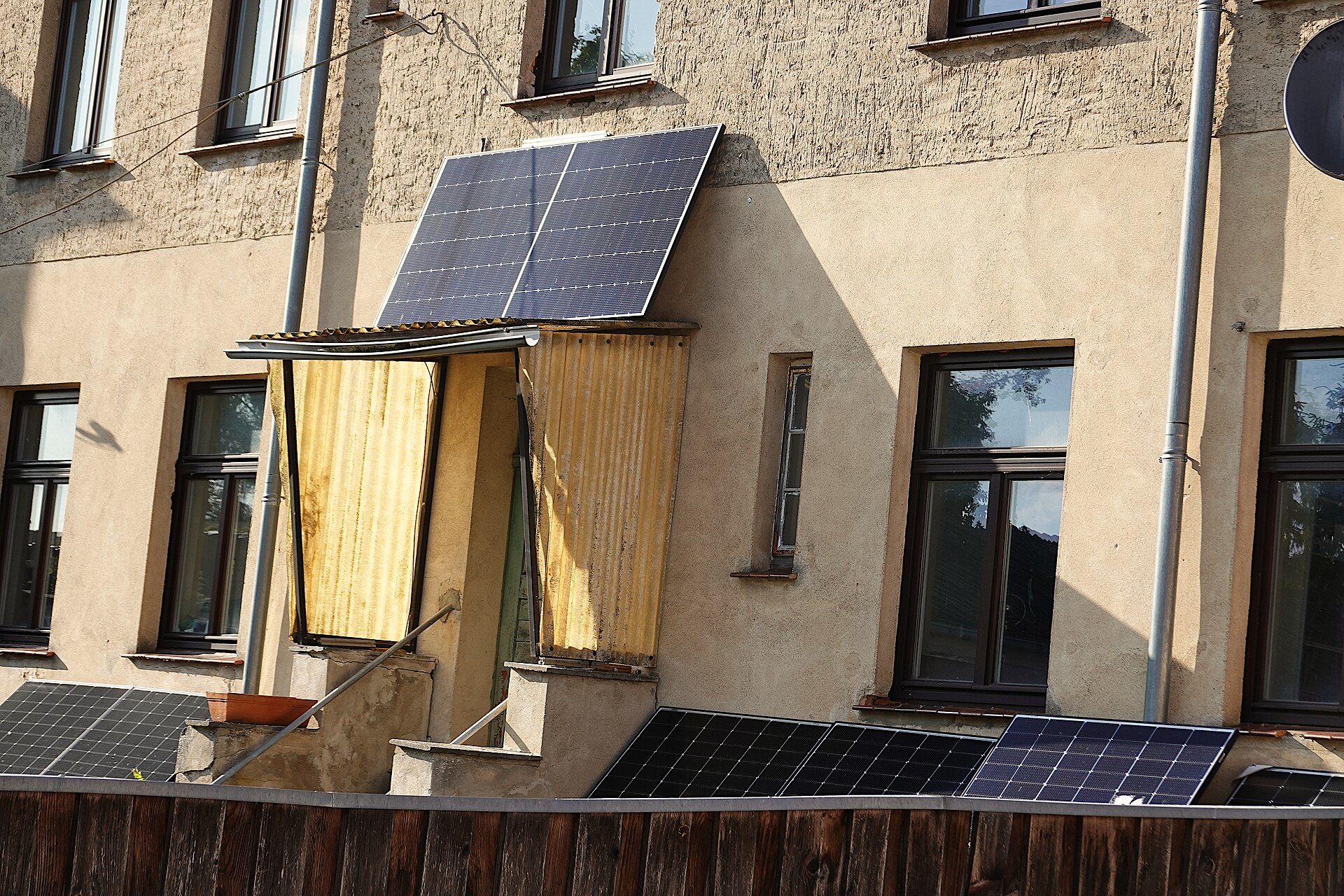
The plug-and-play solar kit — also called a balcony solar kit or Balkonkraftwerk in Germany — is a ready-to-plug mini solar power plant: one or two panels, a built-in micro-inverter and a cable that connects to a standard wall outlet. No building permit, no mandatory electrician, no renovation work: it is the solar product that took Europe by storm in two years, and 2026 marks the shift to mainstream.
Regulation is finally on your side across Europe
The legal framework changed in 2024-2025. Germany, the pioneer market, allows micro-inverters up to 800 W on a standard outlet, and its national register (Bundesnetzagentur) counted more than 750,000 registered installations by mid-2025, with over one million expected by end of 2026. In France, the decree implementing the APER law (April 2025) greatly simplifies “plug-and-play” installations up to 800 W: simplified grid declaration, reduced 10% VAT for kits under 3 kWp, and no tax for full self-consumption. The EU EPBD directive (energy performance of buildings) pushes in the same direction by requiring renewable production in renovated buildings. In Spain and Italy, kits up to 800 W also benefit from simplified procedures (RD 244/2019 in Spain, Decree-Law 63/2024 in Italy).
How much can you really save?
A well-oriented 800 W kit (south or south-west, 20-35° tilt) produces 600 to 800 kWh per year depending on the region — more in Marseille or Seville, less in Hamburg or Lille. At the average EU household electricity price of about €0.25/kWh in 2026, savings reach €150 to €200 per year, i.e. a payback period of 3 to 7 years without a battery, and 6 to 10 years with a battery (which shifts consumption to the evening). As electricity prices keep trending up, profitability improves every year. For comparison, a connected energy monitor — essential to manage self-consumption — costs €50 to €150 and pays for itself within months.
What it changes for your smart home
These kits are no longer plain panels: they are connected devices with an app, an API and sometimes a screen. The app shows real-time production, history and the CO₂ balance, and can switch your appliances on when the sun is out (washing machine, water heater, EV charger). Serious brands expose local APIs: Home Assistant integration is available through community components (Hoymiles, EcoFlow, Zendure, Anker), and Matter is starting to appear on energy storage — in 2026, however, most kits still rely on their proprietary app.
How we tested the solar kits
Our campaign ran from June to August 2026 (10 weeks) on three test sites: a south-facing balcony in Lyon, a west-facing balcony in Nantes and a house terrace in Bordeaux. Each kit was installed following the manufacturer’s instructions, measured with a connected wattmeter (Shelly EM) and scored on the same grid (out of 10):
- Real output — kWh produced versus theory, including in overcast weather.
- App and API — app quality, historical data, export, Home Assistant integration.
- Battery — round-trip efficiency, control, cost per stored kWh.
- Installation — ease of mounting, brackets, cable length, plug safety.
- Reliability — outages, connection drops, updates, customer support.
- Total cost — purchase price, expansion options, warranty and estimated lifespan.
Scores are independent from affiliate programmes: we never rank a better-paying partner above a more deserving competitor.
How to choose your balcony solar kit: the 5 criteria
1. Micro-inverter and panel power
The micro-inverter is the brain of the kit: it converts the panels’ DC current into AC current injected into your outlet. In 2026, the de facto European limit is 800 W for a simple plug-in (600 W in a few countries). An “800 W kit” usually includes two 420-440 W panels with an inverter capped at 800 W: the panels’ peak power deliberately exceeds the inverter’s rating to produce more in cloudy weather. Premium kits (Anker Solarbank 2 Pro, EcoFlow PowerStream) accept several inverters or batteries to reach 1,200 to 2,400 W — above 800 W, check local rules: in France, self-consumption up to 3 kWp remains a simple declarative regime.
2. Battery or not?
Without a battery, the electricity produced is consumed instantly (or fed into the grid for free). With a 1-2 kWh battery (expandable to 4-8 kWh), you store the daytime surplus for the evening — that is where most of the gain lies when you are out during the day. The battery doubles the investment (€400 to €900) but raises self-consumption from 30-40% to 70-80%. Our advice: start without a battery or with a small expandable unit, and add one if your surplus exceeds 2 kWh per day.
3. App, API and ecosystem
Make sure the app shows real-time production and history, and above all that it exposes a local API or Home Assistant access: that is what lets you trigger your appliances (water heater, washing machine, EV charger) when the sun produces. EcoFlow, Zendure, Anker and Hoymiles ecosystems are the best equipped. Matter support on energy storage is still emerging in 2026: don’t buy for that criterion alone.
4. Installation, safety and plugging in
All tested kits plug into a standard outlet, but bracket quality varies: railing mounts and strap fixings must hold a 20-25 kg panel in strong wind. Check the cable length (5 to 10 m), the plug type (Schuko in Germany, French outlet or dedicated plug elsewhere), and favour a kit with plug locking and a certified micro-inverter (VDE, EN 50549). Since 2024, kits sold in Europe include the mandatory anti-islanding protection that shuts the inverter down during a power cut.
5. Quality, warranty and lifespan
A good monocrystalline panel loses less than 0.5% efficiency per year and lasts 25 to 30 years; a quality micro-inverter lasts 10 to 15 years. Demand a product warranty of at least 5 years (10 years at Anker, EcoFlow and Zendure on batteries) and check for EU-based support — this is the weak spot of the cheapest imported kits.
2026 comparison: the best plug-and-play solar kits
| Product | Price (Aug 2026) | Max power | Battery included | App + API | Installation | Score /10 |
|---|---|---|---|---|---|---|
| Anker SOLIX Solarbank 2 Pro | ≈ €1,499 | 2,400 W | Yes (2× 1.6 kWh, expandable) | Excellent + Home Assistant | Moderate (2 inverters) | 9.4 |
| EcoFlow PowerStream (2× 410 W) | ≈ €1,099 | 1,200 W | Option (1-2 kWh) | Excellent + Home Assistant | Easy | 9.1 |
| Zendure SolarFlow + AB1000 | ≈ €949 | 800 W | Yes (1 kWh, expandable ×4) | Very good + Home Assistant | Easy | 9.0 |
| Yuma Play 2 | ≈ €999 | 800 W | Option (1.2 kWh) | Good (Wi-Fi) | Dead simple (brackets included) | 8.7 |
| Beem Energy Kit 460 W | ≈ €999 | 460 W | No (Beem Home option) | Good (Wi-Fi) | Dead simple | 8.4 |
| Hoymiles HMS-800 kit (2× 430 W) | ≈ €499 | 800 W | No | Good (DTU + Home Assistant) | Easy | 8.3 |
| Specs | Anker | EcoFlow | Zendure | Yuma | Beem | Hoymiles |
|---|---|---|---|---|---|---|
| Panels included | 2× 445 W | 2× 410 W | 2× 410 W | 2× 420 W | 2× 230 W | 2× 430 W |
| Micro-inverter | 2× 800 W | 800 W | 800 W | 800 W | 460 W | 800 W |
| Max battery | 6.4 kWh | 4 kWh | 4 kWh | 1.2 kWh | 2.6 kWh | — |
| Protection rating | IP67 | IP67 | IP67 | IP65 | IP65 | IP67 |
| Weight per panel | ≈ 23 kg | ≈ 21 kg | ≈ 21 kg | ≈ 20 kg | ≈ 13 kg | ≈ 22 kg |
| Warranty | 10 years | 10 years | 10 years | 5 years | 5 years | 10 years (inverter) |
Detailed review of the 6 best kits
Anker SOLIX Solarbank 2 Pro — the most powerful (score 9.4/10)
Price observed: ≈ €1,499 (2× 445 W panels + 2 inverters + 3.2 kWh battery). The Anker SOLIX Solarbank 2 Pro is the only kit in our comparison that reaches 2,400 W by combining two micro-inverters, with a battery expandable up to 6.4 kWh. The Anker app is the most polished on the market (real-time production, water heater control, CO₂ balance) and Home Assistant support keeps improving. Installation requires some care (two inverters, specific wiring), and the price is the highest in the test.
Pros
- Record power: 2,400 W, expandable
- 3.2 kWh battery included, expandable to 6.4
- Very complete app
- 10-year warranty
Cons
- High price
- More complex installation than average
- Heavy panels (23 kg)
Best for: houses and large terraces that want to maximise self-consumption, including charging an electric vehicle via a connected EV charger.
EcoFlow PowerStream — the best ecosystem (score 9.1/10)
Price observed: ≈ €1,099 (2× 410 W panels + 800 W inverter). The PowerStream plugs into the EcoFlow ecosystem (batteries, generators, unified apps) and its app is a benchmark. The local API is well documented and Home Assistant integration is mature. The battery is optional (1 to 4 kWh), so you can enter the range on a tighter budget and expand later.
Pros
- Complete, expandable ecosystem
- Excellent app + mature Home Assistant
- Optional battery to spread the budget
Cons
- Battery not included in the base kit
- Power capped at 1,200 W
Best for: users already equipped with EcoFlow gear (power stations, batteries) and Home Assistant tinkerers.
Zendure SolarFlow + AB1000 — best value for money (score 9.0/10)
Price observed: ≈ €949 (2× 410 W panels + 800 W hub + 1 kWh AB1000 battery). Zendure is the only manufacturer to include a battery in the entry-level kit, expandable up to 4 kWh. The hub manages charging smartly (“charge the battery first, then export”) and the app is clear. The AB1000 battery clicks onto the hub tool-free — expansion is genuinely child’s play.
Pros
- 1 kWh battery included at the best price
- Tool-free expansion up to 4 kWh
- Good Home Assistant support
Cons
- Capped at 800 W
- Less responsive support than Anker/EcoFlow
Best for: those who want the battery from day one without breaking the bank.
Yuma Play 2 — the simplest (score 8.7/10)
Price observed: ≈ €999 (2× 420 W panels + 800 W inverter, optional 1.2 kWh battery). Yuma (formerly Sunology) built its reputation on simplicity: railing bracket included, 10-minute tool-free mounting, clear app. EU-based support is a real plus, and the optional battery mounts behind the panel. Power stays capped at 800 W and the API is not public.
Pros
- Ultra-simple mounting, brackets included
- EU support and documentation
- Well-integrated optional battery
Cons
- No public local API
- Power capped at 800 W
Best for: tenants and beginners who want a kit that just works, without tinkering.
Beem Energy Kit 460 W — the most discreet (score 8.4/10)
Price observed: ≈ €999 (2× 230 W panels + 460 W inverter). Beem bets on design and lightness: 13 kg panels, a neat railing bracket and a clean app. Power is limited (460 W) but plenty for a south-facing balcony, and the Beem Home ecosystem (2.6 kWh battery, connected water heater) allows expansion. Price per watt is the highest in the test.
Pros
- Refined design, light panels (13 kg)
- Beem Home ecosystem (battery, water heater)
- Very simple app
Cons
- Power limited to 460 W
- High price per watt
- No local API
Best for: small south-facing balconies and budgets that favour aesthetics.
Hoymiles HMS-800 kit — best budget pick (score 8.3/10)
Price observed: ≈ €499 (2× 430 W panels + HMS-800 micro-inverter, no battery). Hoymiles is the world’s most widespread micro-inverter maker: this kit pairs two good panels with a proven, VDE-certified inverter including the mandatory anti-islanding protection. The DTU app provides monitoring, and Home Assistant integration is excellent thanks to the community (local reading via OpenDTU). No battery, no brackets included: you pick your own mounting.
Pros
- Unbeatable price: €499
- Proven, VDE-certified micro-inverter
- Excellent Home Assistant support (OpenDTU)
Cons
- No simple way to add a battery
- Brackets not included
- Basic app
Best for: a low-cost first step into solar with the best Home Assistant interoperability.
Buying guide by scenario
In a flat, on a balcony (including rented flats)
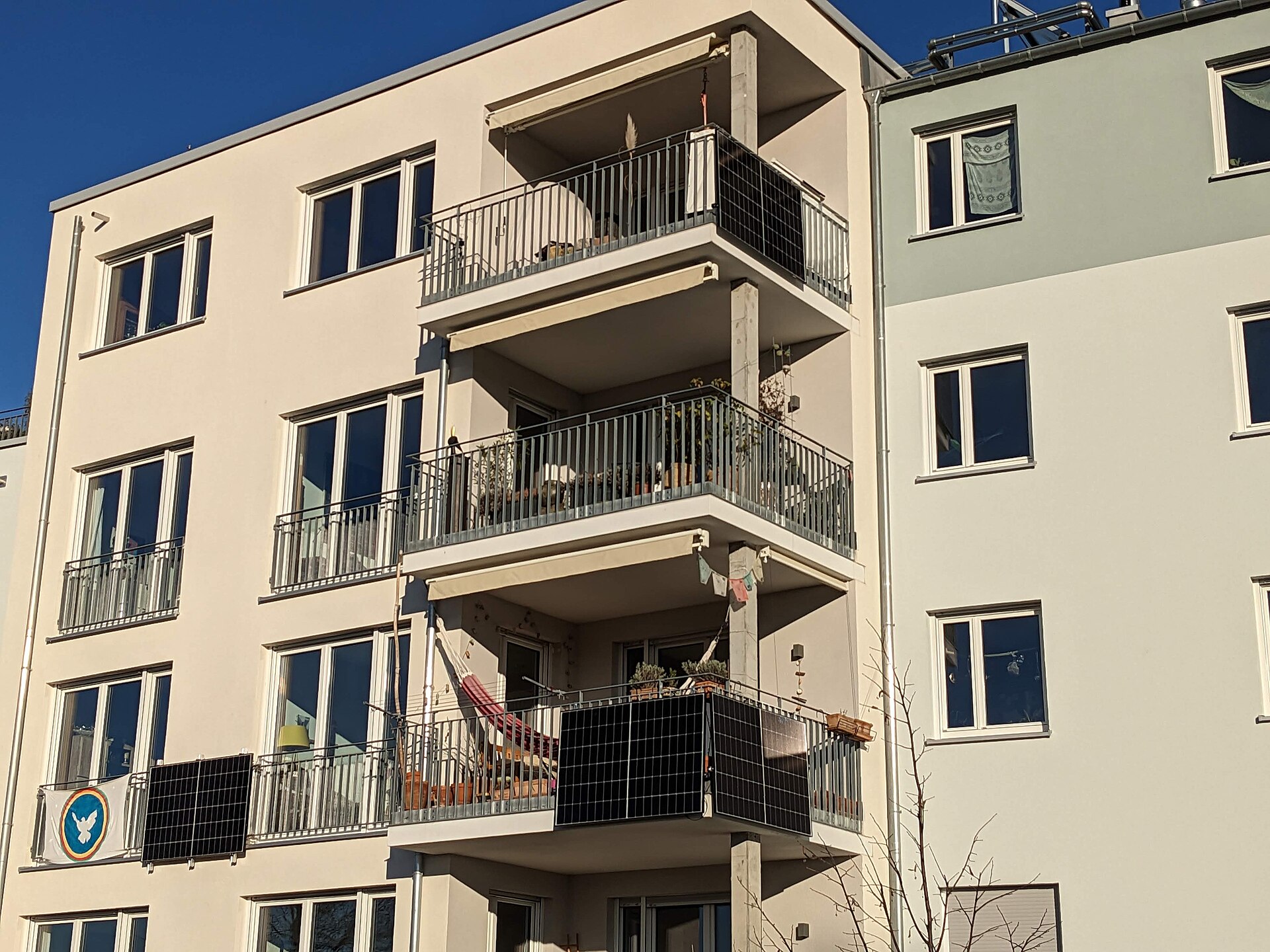
When renting, the kit must be reversible: strap or railing fixings without drilling, no changes to the electrical panel. Yuma Play 2 and Beem are the best suited (brackets included, light weight). Tell your landlord and, where applicable, complete the simplified grid declaration online (free in most EU countries). The kit remains your property and comes down in 10 minutes when you move.
In a detached house
With a house, the terrace or flat roof removes the railing constraint: aim for the most powerful kit (Anker 2,400 W or EcoFlow 1,200 W) and face the panels due south with a 25-30° tilt. If you already have a connected EV charger, the solar kit becomes a real lever: charge the car with daytime sunshine (see our comparison of connected EV chargers).
Tight budget (under €600)
The Hoymiles HMS-800 kit at €499 is the rational choice: certified inverter, serious panels, no battery. Add a generic bracket (€50-80) and an energy monitor to track your production. Expect a 3-5 year payback depending on sunshine.
Maximum self-consumption with a battery
If you are out during the day, a battery is essential to exceed 50% self-consumption. The top trio is Anker (6.4 kWh max), EcoFlow (4 kWh) and Zendure (4 kWh). Combine the battery with automation scenarios: run the washing machine or water heater in the late afternoon when the battery is full, and control everything from your smart home app.
Smart home and Home Assistant
For tinkerers, the winning duo is Hoymiles (OpenDTU) or Zendure (official integration): local data, no mandatory cloud, appliance triggering based on production. It is the same spirit as our Matter guides: your solar installation must stay interoperable, not locked into a proprietary app.
Step-by-step installation (10 minutes)
- Mount the panels on the railing or on the ground with the supplied brackets (straps or hooks), checking wind solidity.
- Connect the panels to the micro-inverter with the MC4 connectors (audible click = correct connection).
- Plug the inverter into a wall outlet, ideally dedicated, with plug locking. Wait 60 seconds: the inverter checks the grid (anti-islanding) before producing.
- Download the app and pair the inverter to your Wi-Fi (2.4 GHz), then check that production shows in real time.
- Declare your installation: online register in Germany (Bundesnetzagentur, free), simplified grid declaration in France, simplified procedure in Spain and Italy.
💡 Pro tip: face your panels south or south-west with a 20-35° tilt (vertical on a railing is acceptable). A panel shaded for part of the day loses 20-40% of its output — give each panel an unobstructed spot.
Why isn’t it working? The 4 common faults
- No production shown: check the MC4 connection and the outlet (the inverter won’t produce if it can’t detect the grid).
- Very low production: the panel is partly shaded or dirty — clean it and move it.
- The app can’t find the inverter: 2.4 GHz Wi-Fi must be enabled (inverters don’t support 5 GHz).
- Repeated cut-outs: an outlet shared with a large appliance may trip the breaker — use a dedicated outlet.
Profitability: the real numbers
| Scenario (800 W, south, 700 kWh/year) | Without battery | With 1-2 kWh battery |
|---|---|---|
| Total kit cost | €500-600 | €950-1,200 |
| Yearly savings (€0.25/kWh) | ≈ €175/year | ≈ €190/year* |
| Self-consumption | 30-40% | 70-80% |
| Payback period | 3-4 years | 5-7 years |
| Net gain over 10 years (excl. inflation) | ≈ €1,150 | ≈ €700-1,000 |
*Slightly higher savings because the battery avoids buying evening electricity at peak rates; add any feed-in tariff for exported surplus where it exists. Figures based on the 2026 average EU household electricity price (~€0.25/kWh) and average European sunshine; adjust to your region and consumption profile — a connected energy monitor (see our comparison) refines the calculation within 2 weeks.
FAQ — Plug-and-play solar kit
Is a plug-and-play solar kit really profitable?
Yes, in 2026: an 800 W kit produces 600 to 800 kWh per year and saves €150 to €200 a year, for an investment of €500 to €1,500. Payback is 3 to 7 years without a battery, 6 to 10 years with one.
Can I plug a solar kit into a standard outlet?
Yes, that is the whole point of plug-and-play: the certified micro-inverter plugs into a standard wall outlet and includes anti-islanding protection that stops production during a power cut. Use a dedicated outlet, ideally with plug locking.
600 W or 800 W: what is the maximum in 2026?
The de facto European standard is 800 W for a simple plug-in connection. Some countries (including France since the 2025 APER decree) allow simple declarative regimes up to 3 kWp. Check local rules before buying a more powerful kit.
Do I need a battery for a balcony solar kit?
No, the battery is optional. Without it, self-consumption reaches 30-40%; with 1-2 kWh of storage it rises to 70-80% by shifting daytime production to the evening. Start without a battery or with an expandable module.
What happens during a power cut?
The micro-inverter shuts down automatically (anti-islanding protection): your kit stops producing during the outage, for the safety of grid workers. Kits with a battery do not provide backup power either, unless explicitly stated by the manufacturer.
Can I install a solar kit in a rented flat?
Yes, if the kit is reversible (no-drill fixings, no changes to the electrical panel) and with the landlord’s agreement. The kit remains your property and comes down in 10 minutes.
Does the solar kit work with Home Assistant or Matter?
Matter is not yet widespread on energy storage in 2026. Home Assistant works very well with Hoymiles (via OpenDTU), Zendure, EcoFlow and Anker through local or community integrations. Check the API before buying if interoperability is your priority.
How long does a solar kit last?
Monocrystalline panels last 25 to 30 years with a degradation below 0.5% per year; the micro-inverter lasts 10 to 15 years; Lithium-Iron-Phosphate (LFP) batteries carry 10-year warranties and often exceed 6,000 cycles. Choose a kit with a product warranty of at least 5 years.
Do I need to declare my installation?
Yes, in most countries: free online register in Germany (Bundesnetzagentur), simplified grid declaration in France, notification to the grid operator in Spain and Italy. It is simple, free and protects your installation.
What is the difference between a solar kit, a solar panel and a solar power plant?
A solar panel is the module that produces electricity; a solar power plant is a full installation (several panels, central inverter, professional mounting); a plug-and-play solar kit is a ready-to-plug set (panels + micro-inverter + cable) designed for self-installation on an outlet.
Conclusion: which solar kit should you choose in 2026?
The plug-and-play solar kit market has reached maturity: clear regulation, certified inverters, affordable batteries and reliable apps. Our verdict after 10 weeks of testing:
- 🏆 Best overall: Anker SOLIX Solarbank 2 Pro — the most powerful, the most complete, the priciest.
- 💰 Best value for money: Zendure SolarFlow + AB1000 — the battery from day one.
- 🪙 Best budget: Hoymiles HMS-800 kit — €499, certified inverter, perfect Home Assistant.
- 🇪🇺 Simplest: Yuma Play 2 — 10 minutes, brackets included, EU support.
In any case, start by measuring your consumption with a connected energy monitor, aim for an 800 W south-facing kit, and expand (battery, second inverter) once you know your habits. Last updated: 18 August 2026.
About the author
Alex Mercer is editor-in-chief and tester at Logis-Connect. A smart home, energy and Matter specialist, he has tested over 200 connected products since 2019. Sources: Bundesnetzagentur (German mini-PV register), the French decree implementing the APER law (April 2025), the EU EPBD directive, Enedis and ADEME data. View author profile.