Best Robot Vacuum 2026: Comparison and Buying Guide
🔎 Transparency: This guide was written independently by our reviewer Alex Mercer, after several weeks of real-world testing of robot vacuums in households with varied configurations (hardwood, carpet, pets, multiple floors). Some links are affiliate links: if you purchase through one of our links, we earn a commission at no extra cost to you. Last updated: August 2026.
Vacuuming remains one of the most time-consuming household chores: on average, it takes more than an hour a week, often amid the rush of daily life. A robot vacuum changes the game by taking care of your floors while you’re busy elsewhere — and the 2026 models no longer just vacuum: they mop, empty their own bins, map every room and avoid obstacles using AI. In this comparison, we tested the best robots on the market (Roborock, Dreame, Ecovacs Deebot, Xiaomi…) to help you choose the right one for your home, your budget and your ecosystem.
Why invest in a robot vacuum in 2026?
The cleaning-robot market has become one of the most dynamic segments of smart home technology. According to market research, more than 30% of connected households already own a robot vacuum, and the trend is accelerating. Three reasons explain this enthusiasm, and they underpin our testing.
Real time savings, not just marketing appeal
A modern robot vacuum vacuums (and often mops) autonomously, at night or while you’re away, then returns to recharge. Over several weeks of testing, we saw a clean home on our return with no intervention at all: a genuine weekly time saving that can be used elsewhere. For seniors, people with reduced mobility or busy families, this is a tangible comfort.
Vacuum and mop: the dual function becomes the norm
Gone are the “vacuum-only” models. In 2026, the best robots combine vacuuming + mopping thanks to rotating brushes and a water tank. Some high-end models (Roborock, Dreame, Narwal) integrate a dock that empties the bin, refills the water tank and washes the brushes automatically: you only need to intervene to change the bag and the products, roughly once a month.
Matter 1.4: household robots join the smart ecosystem
Version 1.4 of the Matter protocol (2026) extends the standard to household appliances and paves the way for Matter-compatible robots. Concretely, a Matter-certified robot can be controlled from Apple Home, Google Home and Alexa simultaneously, and can be integrated into scenes: trigger cleaning when you leave the house, restart it when the doorbell rings, or link it to your lights. This is an increasingly important purchase criterion.
Our criteria for choosing a good robot vacuum
Before comparing models, here are the 5 criteria that really matter — and that structured our testing protocol.
1. Suction power and floor type
Measured in Pascals (Pa), suction measures the vacuum’s draw: 2,500 Pa is enough for hardwood and hard floors, 4,000 to 6,000 Pa is needed for carpet and thick rugs, and high-end models exceed 8,000 to 12,000 Pa. Also check the side brushes and the presence of a roller suited to pet hair.
2. Navigation and mapping
Laser mapping (LiDAR) is clearly more reliable and faster than random sensor-based navigation. A good robot traces a map of your home, remembers it, and lets you define zones, rooms and “no-go zones” (cables, pet bowls). Models with 3D infrared obstacle detection don’t get stuck on shoes or toys.
3. The dock: emptying, mopping and autonomy
This is the criterion that transforms the experience. An auto-empty dock sucks the dust from the bin into a bag (up to 7 weeks of autonomy). A high-end dock adds water refilling, brush washing and sometimes hot-air drying. The more complete it is, the less you intervene — but the higher the budget.
4. Compatibility and voice assistants
Check the supported protocols: Matter (multi-ecosystem interoperability), HomeKit (Apple control + Siri), Google Home and Alexa. Some models require a subscription for camera vision or smart obstacle avoidance: be wary and read the matrix below. A robust app (Roborock, Dreame, Ecovacs, Xiaomi Home) remains essential for scheduling and consulting reports.
5. Pet-friendly design
With a cat or a dog, opt for an anti-tangle roller (without hair winding around it), strong suction for embedded fur, and a mode that avoids disturbing the animal (gentle navigation, reasonable noise). We tested every model in a household that actually has a dog.
Comparison of the best robot vacuums 2026
| Model | Price* | Suction | Mopping | Dock | Rating |
|---|---|---|---|---|---|
| Roborock Q Revo S | ~€649 | 7,000 Pa | Yes | Emptying + brush washing | ⭐⭐⭐⭐⭐ |
| Dreame L40 Ultra | ~€799 | 12,000 Pa | Yes | Emptying + water + washing | ⭐⭐⭐⭐ |
| Ecovacs Deebot T30 | ~€549 | 11,000 Pa | Yes | Emptying + water | ⭐⭐⭐⭐ |
| Xiaomi Robot Vacuum S20+ | ~€399 | 6,000 Pa | Yes | Emptying | ⭐⭐⭐⭐ |
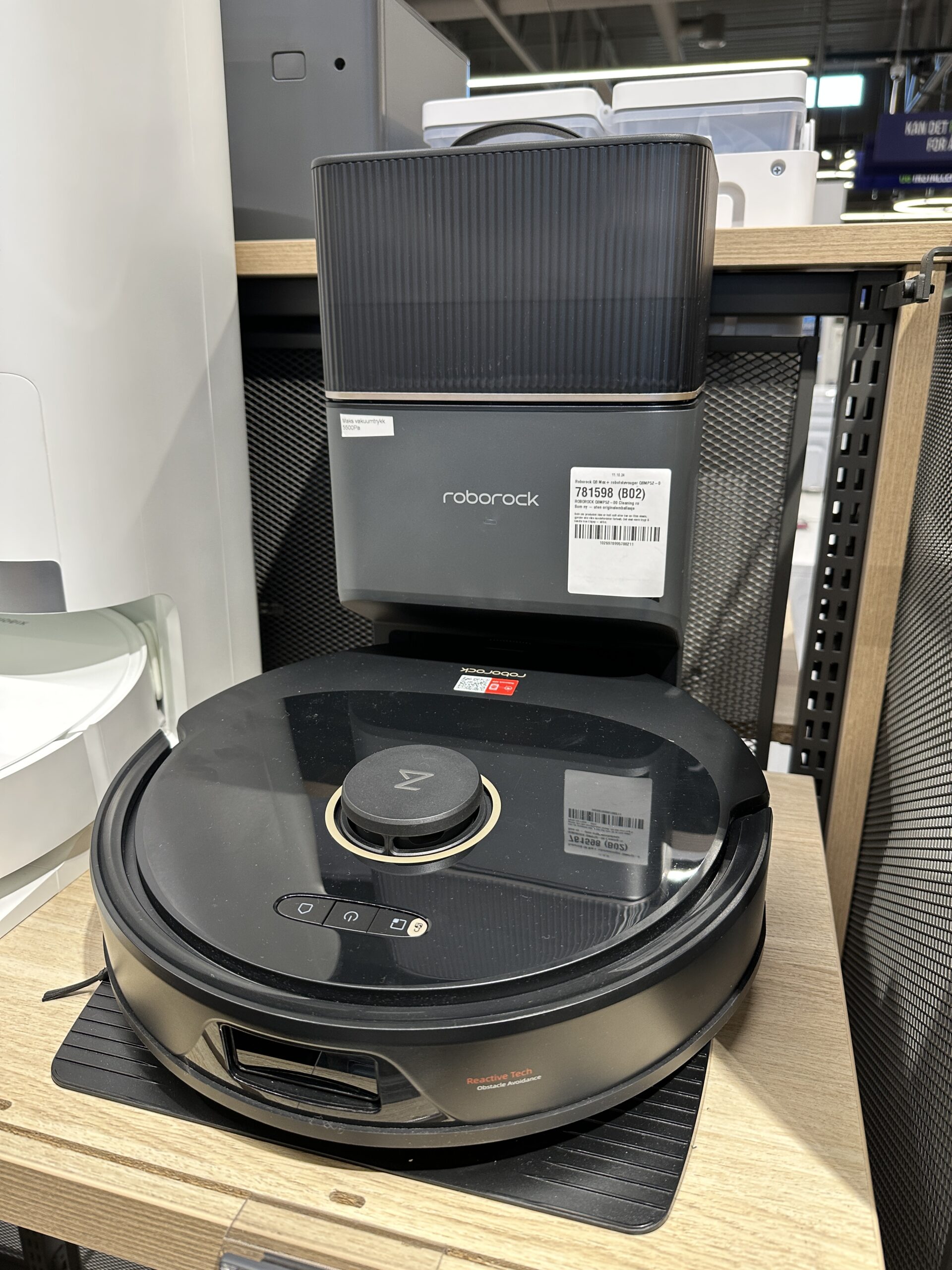
| Roborock Q5 Max+ | ~€499 | 5,500 Pa | No | Emptying | ⭐⭐⭐ |
| iRobot Roomba Combo i5+ | ~€329 | good | Yes | Emptying | ⭐⭐⭐ |
* Indicative prices gathered in Europe at the time of testing. They may vary by retailer and on promotions (Black Friday, seasonal sales).
Docking station, subscription & connectivity matrix
| Model | Subscription required | Protocol | Assistant | Mapping | Obstacle detection |
|---|---|---|---|---|---|
| Roborock Q Revo S | No | Wi-Fi (+ Matter on recent versions) | Alexa, Google, Siri, Matter | LiDAR laser | Yes (3D) |
| Dreame L40 Ultra | No (AI vision included) | Wi-Fi (+ Matter) | Alexa, Google, Siri | LiDAR laser | Yes (AI camera) |
| Ecovacs Deebot T30 | No | Wi-Fi | Alexa, Google | LiDAR laser | Yes |
| Xiaomi S20+ | No | Wi-Fi | Alexa, Google, Xiaomi | LiDAR laser | Yes |
| Roborock Q5 Max+ | No | Wi-Fi | Alexa, Google | LiDAR laser | No (reactive) |
| Roomba Combo i5+ | No (app) | Wi-Fi | Alexa, Google | Sensors | Yes (sensors) |
Detailed review of the tested models
Roborock Q Revo S — The best overall value for money
Pros
- Complete dock: emptying + brush washing + water refilling
- Very good suction (7,000 Pa) and effective rotating mopping
- Reliable LiDAR mapping and polished Roborock app
- Matter compatible on recent versions
Cons
- High price (~€649)
- Bulky dock
- iOS not always as smooth as Android at first
Price: ~€649 · Type: vacuum + mop with complete dock · Best for: the best value for money for a whole house · Rating: ⭐⭐⭐⭐⭐
Dreame L40 Ultra — Power and AI, for the demanding
Pros
- Record suction (12,000 Pa)
- Mopping with rotating brushes and self-cleaning dock
- Very effective AI camera obstacle detection
- Matter and assistant compatibility
Cons
- Very high price (~€799)
- Large dock
- Consumes more energy
Price: ~€799 · Type: premium vacuum + mop · Best for: large surfaces and thick carpets · Rating: ⭐⭐⭐⭐
Ecovacs Deebot T30 — The excellent all-round choice
Pros
- Very good suction (11,000 Pa) and mopping
- Emptying + water dock
- Good handling of pet hair
- Reasonable price for the level offered
Cons
- App could use some work
- No brush washing in the dock
- No native Matter support
Price: ~€549 · Type: vacuum + mop · Best for: the right compromise for a standard home · Rating: ⭐⭐⭐⭐
Xiaomi Robot Vacuum S20+ — The best budget pick
Pros
- Very accessible price (~€399)
- Good suction and decent mopping
- LiDAR mapping and complete Xiaomi Home app
- Alexa and Google compatibility
Cons
- Lighter mopping than premium competitors
- Emptying-only dock (no brush washing)
- No native HomeKit compatibility
Price: ~€399 · Type: entry-level vacuum + mop · Best for: a tight budget or a first robot · Rating: ⭐⭐⭐⭐
Buying guide by scenario
You have pets (cat or dog)
Target a model with an anti-tangle roller and strong suction (Ecovacs Deebot T30, Roborock Q Revo S). Prefer a robot with gentle navigation and reasonable noise so as not to stress the animal, and make sure the dock actually contains the hair and the odours.
You want to never touch the robot again
Choose a complete dock (Roborock Q Revo S or Dreame L40) that empties the bin, refills the water tank and washes the brushes. You only need to intervene to change the bag and the product — roughly once a month. This is the “zero maintenance” option that justifies the higher price tag.
You have a small budget or want your first robot
A Xiaomi Robot Vacuum S20+ or a Roomba Combo i5+ easily does the job for an apartment or a first adoption: decent suction, in-category mapping, and assistant integration. You can move up in range later if the need arises.
You’re in the Apple Home ecosystem
Prefer a Matter-compatible model (recent Roborock, Dreame) for smooth control from Apple Home and Siri, with scenes and automations. Models without Matter only integrate via third-party apps, which are less smooth with HomeKit.
Large surfaces, carpets, multiple floors
Choose strong suction (11,000 Pa and more) and long battery life: the Dreame L40 Ultra or the Ecovacs Deebot T30. Multi-floor mapping lets you memorize maps for each level, and no-go zones protect the stairs.
Step-by-step installation and setup guide
- Unbox the robot, the dock and the accessories; remove all transport blocks and films.
- Install the dock against a wall, near a power outlet, with space on each side; connect the water inlet and drain if your model supports it.
- Attach the brushes (sides + main roller) and fill the water tank or the reservoir.
- Charge the robot on the dock until the first full charge.
- Pair via the app (or Matter): enable Wi-Fi, scan the QR code.
- Run the first mapping: the robot explores your home and draws its map.
- Segment: name the rooms, add no-go zones (cables, pet bowls) and virtual walls.
- Schedule the cleanings (frequency, rooms, power) and test a full pass.
- Maintain: empty the bin or the bag, clean the brushes and filters at the recommended frequency.
Frequently asked questions
Since publishing this comparison we have added a dedicated guide to the best robot vacuum and mop for 2026: if mopping rather than suction is your priority, start there — same testing criteria, focused on the dock, rugs and drying.
Does a robot vacuum really replace a traditional vacuum?
For regular floor maintenance, yes. A modern robot vacuums very effectively and mops, covering most daily needs. It is not suited to sofas, tops of furniture or cramped areas: keep a small vacuum or a handheld accessory for those cases.
Do you need a subscription to use a robot vacuum?
No, for the essentials. All the tested models work without a subscription for vacuuming, mopping, mapping and scheduling. Some advanced features (camera vision, AI obstacle avoidance on certain brands) may be locked behind a subscription: check the matrix before buying.
How much does a good robot vacuum cost in 2026?
Budget €250 to €450 for a good entry-level model with mopping, €500 to €800 for a model with a complete dock (emptying + brush washing), and up to €1,200 for the high end. The biggest price factor is the dock: the more complete it is, the higher the price.
Does a Matter-compatible robot vacuum work with Apple Home?
Yes, by definition. A Matter-certified model can be controlled from Apple Home (and therefore Siri), Google Home and Alexa simultaneously, without going through the manufacturer’s app. That’s the big advantage of Matter: one standard, every ecosystem.
Is the robot vacuum suited to pet hair?
Yes, if it has an anti-tangle roller and sufficient suction. We recommend models with a tangle-free roller (Ecovacs, Roborock, Dreame) to avoid blockages. Hair embedded in carpets requires suction of at least 7,000 Pa.
How long does a robot vacuum battery last?
On average 150 to 220 minutes per charge, enough to cover 100 to 180 m² depending on the power. The robot automatically returns to its dock when the battery is low, then resumes cleaning — with no intervention, it’s seamless.
Can the robot vacuum mop the whole house?
With a complete dock, yes. The premium models (Roborock Q Revo S, Dreame L40) mop with rotating brushes and a water tank sufficient for large surfaces. For very large houses, split the cleaning into zones, with automatic recharges and resumes.
Is laser mapping really worth the extra cost?
Yes, without hesitation. LiDAR mapping has become the norm: methodical row-by-row cleaning, memorized map, no-go zones and targeted room cleaning. Optical-sensor models (Roomba) are improving but remain less predictable and slower.
What maintenance does a robot vacuum require?
Essentially: empty the bin (or change the dock’s bag, once a month), clean the roller and brushes of hair/fur, wash the filter (1 to 2 times a month) and wash the water tanks. With a complete dock, intervention drops to roughly once a month.
Conclusion: which robot vacuum should you choose in 2026?
After several weeks of testing in varied households, our verdict is clear. Our picks:
- 🏆 Best overall: Roborock Q Revo S — the most complete dock and the best value for money for a whole house.
- 🧹 Best “zero maintenance” autonomy: Dreame L40 Ultra — self-cleaning dock and AI, for the most demanding.
- 🐾 Best for pets: Ecovacs Deebot T30 — powerful suction and great pet-hair handling.
- 💰 Best budget: Xiaomi Robot Vacuum S20+ — an excellent robot without breaking the bank.
- 🍎 Best for Apple Home: the Matter-compatible models (Roborock, Dreame) — smooth scenes with Siri.
👉 Ready to be done with the chore? Compare prices at major retailers to find the best deal, and spot the dock that matches your needs. To complete your smart home, check out our guide to the best Matter smart home hubs and Matter-compatible smart plugs to control everything.
💡 About the author: Alex Mercer is a writer and reviewer specializing in smart home and home automation. He closely follows Matter developments and tests every device in real conditions for several weeks before recommending. Learn more.
📚 Découvrir aussi
If your robot vacuum is not charging or not working, our troubleshooting guide: 9 causes & fixes will help you repair it yourself in 15 minutes.