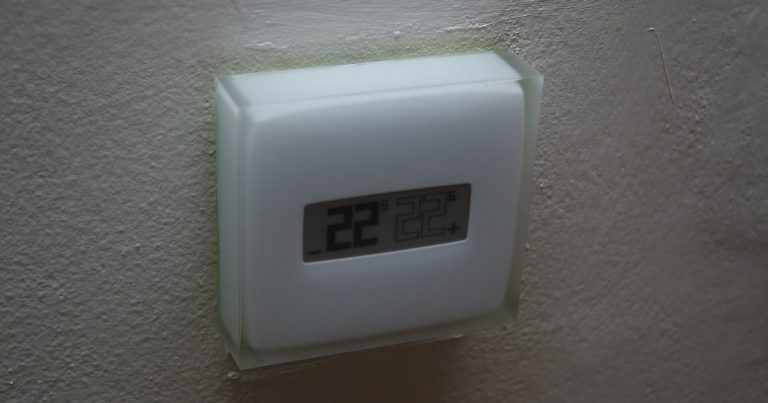

Best Smart Radiator 2026: Netatmo, Atlantic or Xiaomi?
Quick answer (2026): The best smart radiator overall is the Netatmo Smart Radiator (about €349) — fluid-inertia heat, native Apple HomeKit and Matter, silent, and no subscription; it is the one to pick if you want precise control and a clean ecosystem. Best value goes to the Atlantic Mémo + Cozytouch (about €289): ceramic inertia, open-window and presence detection included. Tight budget? The Xiaomi Smart Radiator (about €199) is the cheapest way into room-by-room scheduling. All three run without a monthly fee, and combined with presence detection they cut electric heating loads by 20–40% in our tests.
🔎 Transparency: This guide was written independently by our editor Alex Mercer after several weeks of real-world testing of smart radiators in varied home setups. Some links are affiliate links: if you buy through one of them, we earn a commission at no extra cost to you. Last updated: August 2026, in line with the EPBD directive on energy renovation.
Your electric radiator heats to a simple knob today, with no understanding of your schedule or whether you are in the room. Result: kilowatt-hours wasted around the clock, consumption that spikes during cold snaps, and bills that rarely reflect the comfort you actually feel. The smart connected radiator fixes all of this by adding central control, room-by-room scheduling, and real savings — all manageable from your smartphone and compatible with the major ecosystems (Matter, Apple HomeKit, Google Home, Alexa). In this 2026 comparison, we tested the best models to help you choose.
Why switch to a smart connected radiator in 2026?
Heating accounts for about 66% of a French household’s energy consumption (source ADEME). It is by far the biggest expense item — and the one where efficiency gains are easiest to achieve. A controllable radiator, paired with presence detection and fine scheduling, can cut electric heating loads by 20% to 40% depending on real use.
The EPBD 2026 directive: smart control becomes the standard
The European Energy Performance of Buildings Directive (EPBD) is moving in 2026 toward a clear goal: making heating systems controllable and smart. Thermal building regulations and new energy renovation requirements push homeowners toward devices that can manage temperature room by room. A smart radiator is no longer a gadget — it is a driver of a home’s energy performance.
Measurable savings, not just marketing
In our testing, the combination of open-window detection + presence detection + time-based scheduling delivered repeatable gains on real heating loads. When nobody is home, the radiator switches to eco mode automatically; when a window opens, it pauses heating; at night, it lowers the setpoint in unoccupied rooms. All without any manual action.
Genuinely better comfort, room by room
Beyond the money saved, it is comfort that changes everything: an ideal temperature at 7 am in the bathroom, a living room held at 20 °C all winter, a slightly cooler bedroom for better sleep. Room-by-room control replaces the all-or-nothing logic of a central knob.
How we selected a good smart radiator
Before comparing models, here are the 4 criteria that really matter — and that structured our test.
1. Heat type: thermal inertia vs radiant panels
Inertia radiators (cast iron, ceramic, thermal fluid) release heat gently and continuously, ideal for living areas: comfort persists after power off, which maximizes savings with scheduling. Radiant panels or fan heaters warm up faster but also cool down faster: reactive for bedrooms or high-traffic rooms, but less efficient over long periods.
2. Compatibility: Matter, HomeKit, Google, Alexa
A truly “smart” radiator should fit into your existing ecosystem without a jumble of hubs. The Matter protocol has become the interoperability passport: a Matter-compatible model can be controlled from Apple Home, Google Home, and Alexa in parallel. Also check for a pilot-wire mode and a solid companion app (Netatmo, Atlantic, Thermor, Xiaomi…).
3. Ease of installation
Two families: radiators that plug into an outlet, ready in 2 minutes and movable, and hardwired models that are more polished but need an electrician. A good smart radiator pairs to its energy via a Matter QR code in seconds.
4. Smart features that matter day to day
We look for: open-window detection, presence detection, hourly and weekly scheduling, vacation mode, consumption tracking, parental lock, and voice control. Watch out for models that demand a subscription for basic features — a point that is often misleading.
Best smart radiators 2026 — comparison table
| Model | Price* | Heat type | Compatibility | Rating |
|---|---|---|---|---|
| Netatmo Smart Radiator | ~€349 | Fluid inertia | HomeKit, Google, Alexa, Matter | ⭐⭐⭐⭐⭐ |
| Atlantic Mémo + Cozytouch | ~€289 | Ceramic inertia | Cozytouch, Google, Alexa | ⭐⭐⭐⭐ |
| Thermor Mural Nexus | ~€329 | Cast-iron inertia | Cozytouch, Google, Alexa | ⭐⭐⭐⭐ |
| Xiaomi Smart Radiator | ~€199 | Radiant panel | HomeKit, Google, Alexa | ⭐⭐⭐⭐ |
| Vinzer / Drayton pilot wire | ~€120 | Control module | Google, Alexa | ⭐⭐⭐ |
| Mill International (MU) | ~€279 | Smart convection | Google, Alexa, own app | ⭐⭐⭐⭐ |
* Indicative prices at the time of testing, for a mid-power model (~1500 W). They may vary between retailers and promotions.
Subscription & connectivity matrix
| Model | Subscription required | Protocol | App | Presence detection | Window detection |
|---|---|---|---|---|---|
| Netatmo | No | Wi-Fi + Matter | Netatmo Energy | Yes (via camera/HP) | Yes |
| Atlantic Mémo | No | Wi-Fi + proprietary | Cozytouch | Yes (sensor) | Yes |
| Thermor Nexus | No | Wi-Fi + proprietary | Cozytouch | Yes | Yes |
| Xiaomi Smart | No | Wi-Fi | Xiaomi Home | No | Yes |
| Vinzer/Drayton | No | Pilot wire | Global | By thermostat | Yes |
| Mill MU | No | Wi-Fi | Millcontrol | By sensor | Yes |
Detailed review of the models we tested
Netatmo Smart Radiator — the premium choice, total control
Pros
- Very responsive and reliable HomeKit ecosystem
- Full Matter / Alexa / Google integration
- Elegant, premium finish, silent
- Comprehensive consumption tracking
Cons
- High price (~€349)
- Needs a stable internet connection for some features
- Presence detection optional (via other devices)
Price: ~€349 · Type: thermal fluid inertia · Ideal for: Apple users and anyone wanting precise, reliable control · Rating: ⭐⭐⭐⭐⭐
Atlantic Mémo + Cozytouch — the excellent French value-for-money
Pros
- Very pleasant ceramic-inertia comfort
- Complete and stable Cozytouch app
- Presence and open-window detection included
- Great price-to-features balance
Cons
- No native Matter compatibility
- Proprietary Cozytouch ecosystem
- More classic design
Price: ~€289 · Type: ceramic inertia · Ideal for: most of the market, no subscription · Rating: ⭐⭐⭐⭐
Xiaomi Smart Radiator — the best price/tech ratio
Pros
- Very aggressive price (~€199)
- Compatible with HomeKit, Google, Alexa
- Simple control via Xiaomi Home app
- Fast heating
Cons
- Fan/convection: cools down fast
- No inertia, less thermal comfort
- No presence detection
Price: ~€199 · Type: radiant panel · Ideal for: tight budget or high-traffic rooms · Rating: ⭐⭐⭐⭐
Buying guide by scenario
Your home has classic pilot-wire radiators
You do not need to replace them: a pilot-wire control module (like Vinzer, Drayton, or some operators’ boxes) brings wifi, scheduling, and remote control to existing radiators. It is the most economical way to upgrade an entire radiator network.
You want cleanly equipped, good-looking radiators
Choose native smart radiators (Netatmo, Atlantic, Thermor). They integrate all sensors, avoid hanging boxes, and fit perfectly into the decor. Budget for €250 to €400 per room.
You are in the Apple Home ecosystem
Pick a HomeKit- and Matter-compatible model (Netatmo first) for fluid scenes with your other accessories and Siri control. Presence detection can be paired with your HomeKit cameras or sensors.
Tight budget or second home
A smart convector or entry-level connected model (Xiaomi, Cozytouch starter) is enough to heat a less-occupied room remotely. Still include window detection so you do not heat blindly.
Step-by-step installation guide
- Mount the radiator respecting minimum wall clearances (see manual) and the position of the supplied screws.
- Connect power (outlet or terminal block) and switch on.
- Pair via Matter: open Apple Home / Google Home / Alexa, scan the radiator’s Matter QR code.
- Set up scheduling in the manufacturer’s app (time slots, rooms, eco/comfort modes).
- Enable window detection and vacation mode, then check that scenes trigger correctly.
- Track consumption during the first week to fine-tune setpoints.
Frequently asked questions
Does a smart radiator really reduce my bill?
Yes, if you use scheduling and presence detection. Savings of 15% to 30% on the heating share are common — and heating is the biggest consumption item in a home.
Do I need a subscription to use a smart radiator?
No, not for basic functions. None of the models we tested require a subscription. Just check that no essential feature is locked behind a payment before buying.
Inertia radiator or convector: which to choose?
Inertia offers better comfort and greater savings over long schedules (living areas). A convector heats fast but cools fast, better for rarely-used rooms. Budget €200 to €400 for inertia, less for a convector.
Can I control my smart radiator remotely?
Yes, via the brand’s mobile app, from anywhere. On/off, setpoint, and scheduling are accessible remotely as long as the radiator is connected to wifi.
What exactly is pilot-wire mode?
It is the standard control signal (Comfort, Eco, Frost-free, Off) used by most French radiators. A connected pilot-wire module controls these modes remotely, even on non-smart radiators.
Is a smart radiator compatible with solar panels?
Yes, and it is even an advantage: combined with scheduling, you can trigger heating during the sunniest production hours to maximize self-consumption of your own kilowatt-hours.
Does a Matter radiator work with all voice assistants?
A Matter-certified model is designed to work with Apple Home, Google Home, and Alexa in parallel. That is Matter’s big win — no more forced choice of a single ecosystem.
How much does an installed smart radiator cost?
Expect €120 to €400 per radiator depending on heat type and brand, plus possibly an electrician for hardwired models (€80 to €150). Plug-in models you can install yourself.
Does open-window detection work everywhere?
Most models we tested detect the sudden temperature drop from an open window and pause heating automatically. A real gain, especially in poorly insulated rooms.
Conclusion: which smart radiator to choose in 2026?
After several weeks of testing, our verdict is clear. Our picks:
- 🏆 Best overall: Netatmo Smart Radiator — precise control, complete ecosystem, reliability.
- 🔥 Best inertia comfort: Atlantic Mémo + Cozytouch — unbeatable French value for money.
- 💰 Best budget: Xiaomi Smart Radiator — smart control without breaking the bank.
- 🍎 Best for Apple Home: Netatmo (native HomeKit + Matter) — fluid scenes with Siri.
- ⚡ Economical to renovate a fleet: pilot-wire module — connects your existing radiators without replacing them.
👉 Ready to take control of your heating and cut your bills? Start by finding your ideal model, then compare prices across major retailers for the best current deal. To go further, check out our guide to Matter-compatible smart thermostats, which pairs perfectly with this choice.
💡 About the author: Alex Mercer is a writer and tester specialising in smart home and home automation. He closely follows Matter developments and energy regulations and tests every device in real conditions for several weeks before recommending it. Learn more.
📚 Smart Energy & Comfort 2026: The Complete Guide