Best Smart Thermostat 2026: Complete Comparison & Buying Guide
Your heating bill keeps climbing, yet you’re heating “blind”, without knowing when your boiler runs or at what temperature. The smart thermostat changes the game completely: it learns your habits, detects your presence and adapts the heating room by room to save up to 30 % of energy. In 2026, with the EU EPBD directive and support schemes such as the energy voucher or the CEE bonus, it’s the perfect time to make the leap.
Quick answer (2026): For most homes, the tado° V3+ kit (~€250) is the best all-round smart thermostat — room-by-room control, geofencing and the widest boiler compatibility, though the advanced Auto-Assist features need an optional paid plan. On a tighter budget, the Netatmo Thermostat (~€160) is the value pick: heating and hot water, no subscription, and a clean app. Choose the Google Nest Learning (~€280) if you want automatic learning with a display, or the ecobee SmartThermostat Premium (~€230) for multiroom setups thanks to its remote sensor. None of the five models requires a paid plan just to run.
But faced with tado°, Netatmo, Google Nest or Honeywell Home, it’s impossible to find your way without a reliable source. This independent 2026 comparison puts the 5 best smart thermostats on the market under the microscope: their strengths, their subscription pitfalls and the perfect model for every type of home. By reading this guide, you’ll know exactly which one to install before the heating season.
| Model | Type | Indicative price | Rating |
|---|---|---|---|
| tado° V3+ — Boiler kit | Wireless relay | ~€250 | 9.5/10 |
| Netatmo Thermostat | Relay + box | ~€160 | 9.0/10 |
| Google Nest Learning | Relay + display | ~€280 | 8.8/10 |
| Honeywell Home T9 | With remote sensor | ~€200 | 8.5/10 |
| ecobee SmartThermostat Premium | With presence detection | ~€230 | 8.7/10 |
Why install a smart thermostat in 2026?
Heating still accounts for nearly 66 % of the energy consumption of a French home. A conventional thermostat only switches the boiler on at a fixed time. A smart thermostat goes much further: it anticipates, adapts and keeps you informed. Three concrete reasons justify the investment today.
Real, measurable savings
According to ADEME, a programmable thermostat can save between 10 and 15 % on your heating bill. Smart thermostats with presence and open-window detection push those savings up to 25–30 %. On an annual bill of €1,500, that represents between €150 and €450 in savings every year. Adding smart thermostatic radiator valves amplifies the gain still further by regulating each room individually.
💡 Pro Tip: enable the “open-window detection” feature on all your devices. A single radiator left open under a window can waste up to 15 % of the room’s energy without you even noticing.
Comfort: the ideal temperature, without thinking about it
Goodbye to the “I’m cold, let me turn the heating up” that ends up leaving you sleeping in an overheated room. The smart thermostat heats just before you wake up, lowers the temperature at night, adapts to the lulls of the day and syncs with your return home thanks to phone geolocation. The result: a stable, comfortable temperature with no waste.
A favourable regulatory and financial context
The European EPBD directive (Energy Performance of Buildings) accelerates the renovation of homes and pushes toward intelligent heating control. On the support side, the energy voucher and the CEE “Coup de pouce Pilotage” bonus can fund all or part of the purchase of a smart thermostat. A €250 tado° thermostat can thus be reimbursed to the tune of several dozen euros, cutting the return on investment to under two winters.

How to choose your smart thermostat: the essential criteria
Before comparing models, you need to set your priorities. Here are the 5 criteria that really make the difference when choosing a smart thermostat.
1. Compatibility with your boiler and your ecosystem
First check that the thermostat is compatible with your installation (gas or oil boiler, heat pump, electric radiators) and with your voice assistants. Recent models support Matter, Apple HomeKit, Alexa and Google Home simultaneously. If you live in an Apple HomeKit ecosystem, look for a HomeKit-certified model. For universal compatibility, prefer a Matter-compatible thermostat, as explained in our dedicated Matter-compatible smart thermostat comparison.
2. Mandatory subscription or no subscription?
This is the market’s trap No. 1 (cost of ownership). Some models require a monthly subscription to access their smart features (presence detection, geolocation, usage reports). Others — like Netatmo or tado° in its core functions — work no subscription. If the monthly cost puts you off, prefer a no-fee model. For security solutions, also check out our comparison of no-subscription alarms.
3. Built-in sensors
The quality of a smart thermostat depends on its sensors. Look for: presence detection (via radar or memory grid), open-window detection (sudden temperature variation), and the ability to connect a remote temperature sensor to regulate the room you’re actually in.
4. Installation: DIY or by a professional
Most smart thermostats (tado°, Netatmo, Nest) install in 30 minutes, with no mains wiring, simply connecting to the two wires of the boiler. It’s within the reach of a moderately skilled DIYer. For heat pumps or complex installations, plan on a certified installer. The CEE support schemes often require professional installation to qualify.
5. Connectivity and hub
Prefer a thermostat that connects directly over Wi-Fi, or via a Zigbee/Thread hub already present in your home (for example the internet box with a Matter/Thread border router). This avoids stacking bridges and simplifies centralised control from an app or assistant. The connection requires a recent box and good Wi-Fi coverage all the way to the boiler.
Comparison of the 5 best smart thermostats 2026
Here is our 2026 selection of thermostats that combine the best value for money, the most advanced smart features and proven reliability. Note that these models mainly concern installations with a boiler (gas or oil); for electric radiators, we dedicate a section to smart radiator valve heads.
| Model | Compatibility | No subscription | Presence detection | Ecosystems | Rating |
|---|---|---|---|---|---|
| tado° V3+ | Gas/oil boiler | ✅ (core) | ✅ | Alexa, Google, HomeKit, Matter | 9.5/10 |
| Netatmo | Gas/oil boiler | ✅ | ✅ (geo) | Alexa, Google, HomeKit | 9.0/10 |
| Google Nest | Boiler + heat pump | ✅ | ✅ (detect) | Google, Alexa | 8.8/10 |
| Honeywell Home T9 | Boiler + sensor | ✅ | ✅ (sensors) | Alexa, Google | 8.5/10 |
| ecobee Premium | Boiler + heat pump | ✅ | ✅ (radar) | Alexa, HomeKit, Google | 8.7/10 |
| Feature | tado° V3+ | Netatmo | Google Nest | Honeywell T9 | ecobee |
|---|---|---|---|---|---|
| Mobile app | ✅ | ✅ | ✅ | ✅ | ✅ |
| Geolocation | ✅ | ✅ | ✅ | ✅ | ✅ |
| Usage report | ✅ (managed) | ✅ | ✅ | ✅ | ✅ |
| Compatible valve heads | ✅ | ✅ | ❌ (via Nest) | ✅ | ❌ |
| Measurement via energy supplier | ✅ | ❌ | ❌ | ❌ | ❌ |
Detailed review of each model
tado° V3+ — The best overall
Price: ~€250 (boiler kit · V3+) · Type: Wireless relay with battery- or mains-powered control unit.
Strengths: the most accurate presence detection on the market, open-window detection, full integration of thermostat valve heads, Holiday mode, an “Aileron” feature compatible with energy suppliers to reduce the excise tax on final energy consumption (formerly TICFE), and integrations with Amazon Alexa Pay and voice control. Robust and reliable, excellent app.
Weaknesses: the advanced features (multi-zone detection, open-window detection) require certain accessories; slightly more technical installation.
Best for: homes with a gas boiler that want the most complete and expandable system.
Rating: 9.5/10
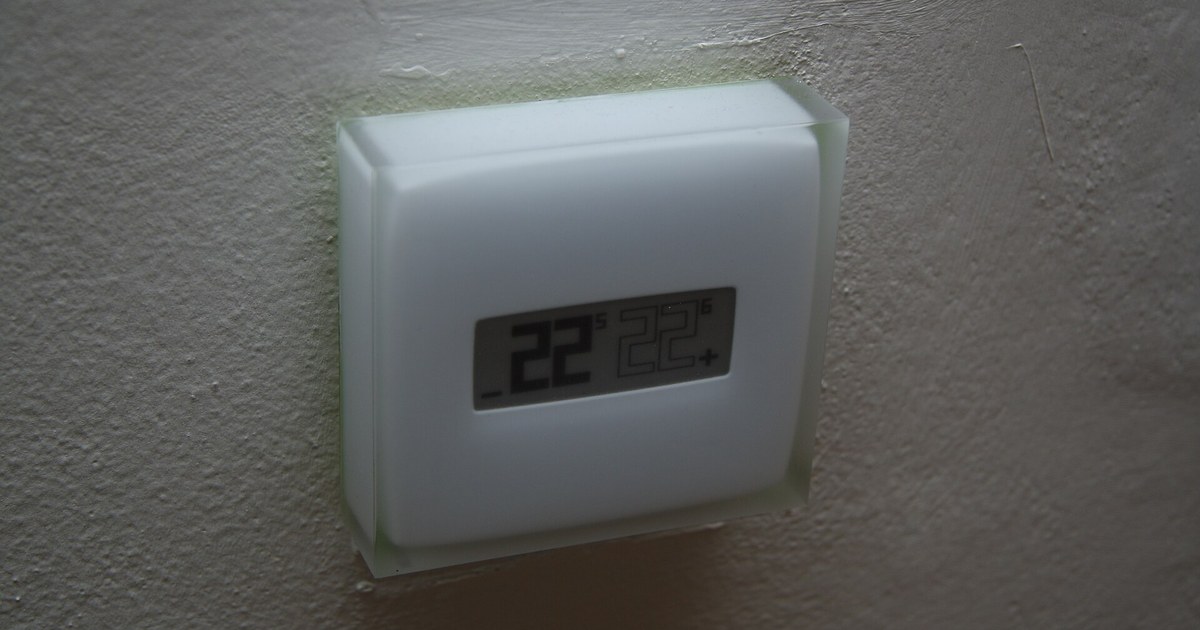
Netatmo Thermostat — The best without subscription and for HomeKit
Price: ~€160 (with valve + kit) · Type: Connected relay with a small LED screen and control unit.
Strengths: 100 % no subscription, the best Apple HomeKit choice, accurate geolocation, presence detection on the unit, savings report, sober signature design. A French brand, with data hosted in Europe.
Weaknesses: not natively Matter (via gateway), window sensors are sold separately, the thermostat valve-head ecosystem is more limited than tado°.
Best for: Apple/HomeKit households and anyone who refuses any subscription.
Rating: 9.0/10
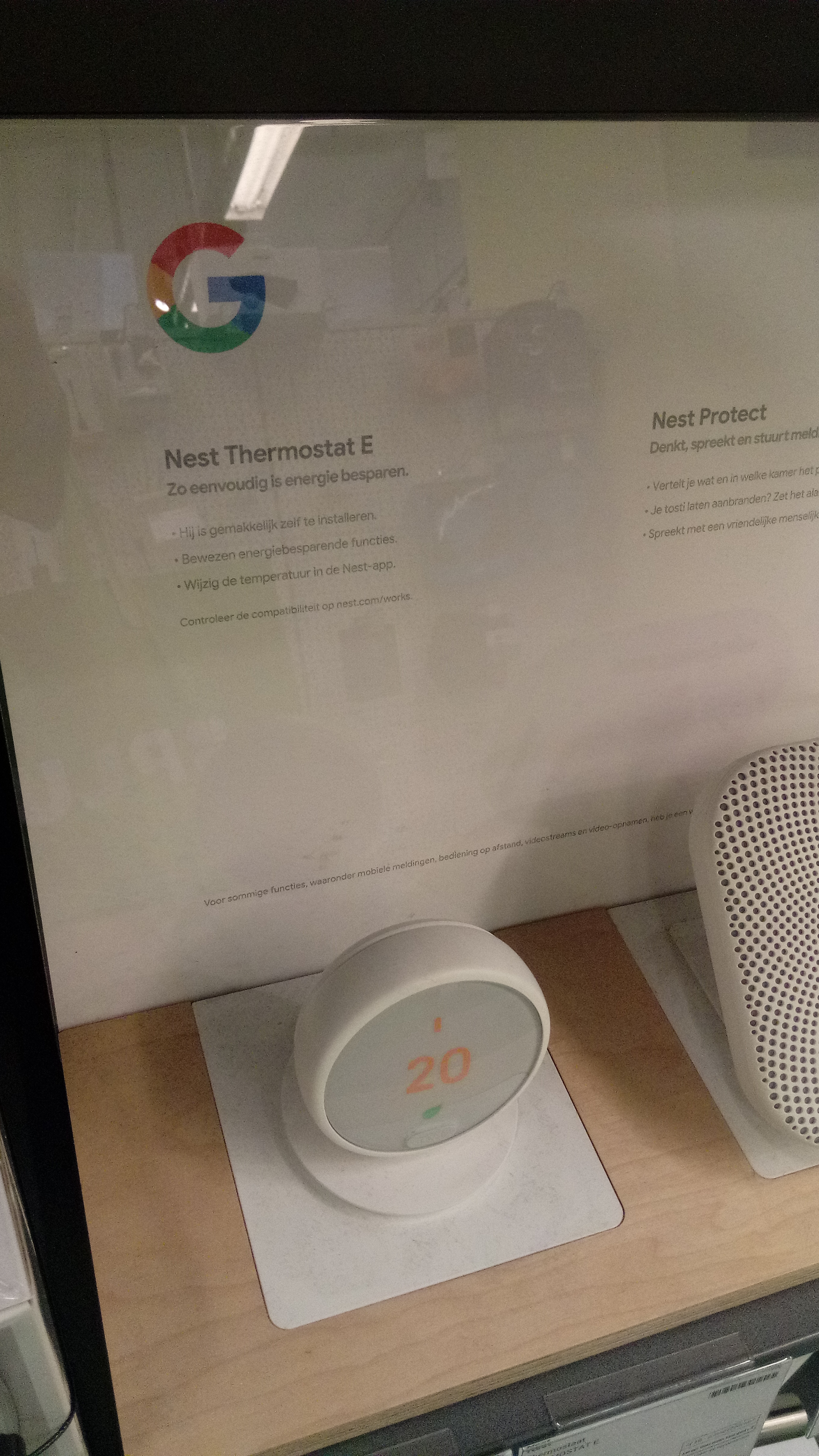
Google Nest Learning Thermostat — The most elegant
Price: ~€280 · Type: A thermostat with an elegant touch colour display that learns from your habits.
Strengths: automatic learning (auto-schedule), elegant bright display, presence detection, very good Google Home integration and heat-pump compatibility, premium look.
Weaknesses: the “Home/Away Assist” subscription for some advanced features may require a subscription depending on region, a limited valve-head ecosystem, no native HomeKit.
Best for: Google households and design lovers.
Rating: 8.8/10
Honeywell Home T9 — The best for multi-zone and remote sensor
Price: ~€200 · Type: Thermostat with touchscreen and up to 3 remote temperature sensors (wireless).
Strengths: multi-zone control with sensors placed in the rooms that are actually occupied, boiler and heat-pump compatibility, Honeywell brand reliability, clear display and free (no subscription).
Weaknesses: slightly dated design, a less intuitive app than tado° or Netatmo, no native HomeKit or Matter.
Best for: large homes where the temperature varies a lot from one room to another.
Rating: 8.5/10
ecobee SmartThermostat Premium — The most complete for detection
Price: ~€230 · Type: Thermostat with radar presence sensor and built-in speaker (Alexa).
Strengths: ultra-precise radar presence detection, temperature-drop detection, optional presence/slave sensor, excellent HomeKit, Alexa and Google compatibility, detailed energy report.
Weaknesses: price; sometimes advanced features require an ecobee+ subscription; less widespread in continental Europe than in the United States.
Best for: multi-assistant households and enthusiasts of fine-grained detection.
Rating: 8.7/10
Buying guide by scenario
Every installation is unique. Here’s how to choose the ideal thermostat according to your setup:
- 🏠 Gas boiler (standard): tado° V3+ or Netatmo. Both excel on a gas boiler, with presence and open-window detection. tado° if you plan to add thermostat valve heads; Netatmo for no-subscription and HomeKit.
- ⚡ Electric radiators: a smart radiator valve per radiator (tado°, Netatmo, Moes, or Delta Dore) rather than a central thermostat. Room-by-room control, without pulling cables.
- 🌡️ Heat pump: Google Nest or a tado° with the dedicated heat-pump feature. Opt for a certified heat-pump-compatible model for optimised control of the flow temperature.
- 🍎 Apple HomeKit ecosystem: Netatmo is the HomeKit champion, very stable with HomePod and the Home app. tado° is also HomeKit-compatible via hub.
- 💰 Tight budget / no subscription: Netatmo (100 % no subscription) is the best value for money. Honeywell T9 is an excellent no-fee alternative.
Step-by-step installation guide
Installing a smart thermostat on a gas boiler is within the reach of a moderately skilled DIYer. Here’s the typical procedure for tado° / Netatmo:
- Cut the power: cut the current at the circuit breaker and the boiler’s power supply to work safely.
- Identify the wires: remove the old thermostat and note the position of the wires (usually two “TA” wires going to the boiler).
- Wiring: connect the wires to the terminal block of the new thermostat relay (COM / NO markings), then screw the unit to the wall.
- Restore the power: switch the circuit breaker and the boiler back on.
- App setup: download the app, create your account, scan the QR code and follow the Wi-Fi pairing.
- Ecosystem pairing: connect the thermostat to HomeKit, Alexa or Google Home for voice control.
- Programming: set your schedules, and enable presence and open-window detection.
🔧 Good to know: to qualify for certain CEE bonuses, the installation must be carried out by a certified professional (identified by the French “RGE” label). Keep your invoice and the installation certificate for your administrative procedures.
FAQ — Frequently asked questions
1. Does a smart thermostat work without a subscription?
Yes, models like Netatmo or tado° (core functions) work entirely without a subscription. Only certain advanced features (precise multi-zone, detailed reports) may be paid depending on the brand.
2. How much can you save with a smart thermostat?
According to ADEME, between 10 and 15 % with a programmable thermostat, and up to 25–30 % with a smart model equipped with presence and open-window detection. On a €1,500 bill, that can amount to €150 to €450 per year.
3. Is installation difficult?
No, most models (tado°, Netatmo, Nest) install in 30 minutes on an existing boiler, with no mains wiring, simply connecting the two control wires. Heat-pump installations are more technical.
4. Is it compatible with my boiler?
Most models are compatible with two-wire (ON/OFF) gas and oil boilers. Check the exact compatibility on the manufacturer’s website with your model reference. Heat pumps often require a model with a more advanced output.
5. Does the thermostat work with Alexa, Google Home or HomeKit?
Yes for the main models. Netatmo and ecobee support HomeKit, Alexa and Google Home. tado° and Google Nest support Alexa and Google (tado° also HomeKit). In 2026, Matter-compatible models guarantee maximum interoperability.
6. Are there any grants to help fund the purchase?
Yes: the CEE “Coup de pouce Pilotage” bonus, the energy voucher and certain local grants (such as the French National Housing Agency, Anah) can fund the purchase and installation of a smart thermostat. Conditions vary according to your situation and region.
7. What is a smart radiator valve head?
It’s a valve that replaces the knob on your radiator and can be controlled individually (via app, voice assistant or central thermostat). Ideal for regulating room by room on hot-water radiators.
8. Is the usage report reliable?
Yes, smart thermostats estimate consumption from the boiler’s operating time and the declared power. It’s an excellent indication of trends and savings, but not a meter-based billing.
Conclusion
In 2026, investing in a smart thermostat is one of the fastest ways to reduce your heating bill while gaining comfort. After testing and comparing the 5 best models, here is our verdict:
- 🏆 Best overall: tado° V3+ — the most complete and expandable, with a reference presence-detection system.
- 🍎 Best for Apple HomeKit: Netatmo Thermostat — stable, elegant, 100 % no subscription.
- ⚡ Best for electric radiators: tado° radiator valve heads (with the thermostat) — room-by-room control.
- 🌡️ Best for heat pump: Google Nest — optimised control and design.
- 💰 Best budget: Netatmo — all the advantages without a subscription at a contained price.
Whatever you choose, make sure the model is compatible with your installation and has no hidden fees. Once installed, your smart thermostat will work for you every day, reducing your consumption and your emissions. And to build a truly connected home, also explore our guides on smart smoke detectors and smart roller shutter motors.
📚 Smart Energy & Comfort 2026: The Complete Guide