Best Smart Heat Pump Water Heater 2026: Comparison and Buying Guide
The best smart heat pump water heater in 2026 is the Atlantic Calypso Connecté 200 L: €2,668 recommended retail price before installation, native Wi-Fi with no bridge, R290 refrigerant, 45 to 47 dB(A) and a COP of 3.18 measured at 7 °C under EN 16147. For raw efficiency, the Thermor Aéromax 6 200 L reaches 3.40 at 15 °C. On a tight budget, the Ariston Nuos Plus S2 WiFi drops to around €1,300 for the unit alone.
Affiliate disclosure: this article contains affiliate links. If you buy through them we may earn a commission at no extra cost to you. Prices were collected between 1 and 20 October 2026 from French manufacturers and retailers: they move fast, and a unit-only price is never comparable to an installed price. Our ranking is not influenced by commissions.

What exactly is a smart heat pump water heater?
A heat pump water heater (HPWH) is a hot water cylinder in which the electric element has been replaced, in normal operation, by a small air-to-water heat pump. A fan draws air from the room, the evaporator captures the calories, the compressor raises the temperature and the condenser transfers that heat into the domestic hot water. The result: for 1 kWh of electricity consumed, the unit delivers 3.2 to 3.4 kWh of heat. A conventional resistive cylinder stays at 1 to 1.
The “smart” part is the built-in Wi-Fi module and the manufacturer app: Atlantic Cozytouch, Thermor Cozytouch (same ecosystem), Ariston Net, MiGo for Saunier Duval. In practice the app lets you set how much hot water to produce, run a Boost before guests arrive, switch production off during a holiday and read consumption in euros. It is useful; it is not magic, and we come back to that below.
The French energy agency ADEME sums up the point: a HPWH uses three times less energy than a conventional model. Atlantic claims up to 75 % savings on the hot water bill. Those figures are theoretical maximums, achieved with a correctly sized unit, a room at a sensible temperature and a household that actually draws the water produced. In real life, expect 55 to 70 % savings on the hot water line — still the best lever in a home after space heating.
2026 comparison: five connected models put to the test
We shortlisted five units genuinely available in Europe in October 2026, all controllable remotely, and scored them on the same grid: efficiency (COP and load profile), price, noise, footprint, quality of the app and ease of installation. The “not published” cells are data missing from the public datasheets we consulted: those are exactly the figures you must demand on the quote.
| Model | Capacity | COP (EN 16147) | Noise | Price observed (unit) | Control | Score |
|---|---|---|---|---|---|---|
| Atlantic Calypso Connecté | 200 L (100–240 L) | 3.18 at 7 °C | 45–47 dB(A) | €2,668 at 5.5 % VAT – €1,999.90 in retail | Native Wi-Fi, Cozytouch | 9.2/10 |
| Thermor Aéromax 6 | 200 L (100–240 L) | 3.40 at 15 °C | 45–50 dB(A) | €3,034 Thermor list price, Oct 2026 | Wi-Fi + bridge depending on version | 8.8/10 |
| Ariston Nuos Plus S2 WiFi | 200 L | 3.43 at 7 °C | not published | around €1,300 | Wi-Fi, Ariston Net | 8.5/10 |
| Thermor Aéromax Access | 200 L | not published (class A) | not published | €1,434 to €2,245 | Native Wi-Fi, Cozytouch | 7.8/10 |
| Saunier Duval Magna Aqua | 200 L | not published | not published | €3,422 installed (IZI by EDF) | Wi-Fi, MiGo | 7.5/10 |
Atlantic Calypso Connecté: the best all-round choice
The Calypso is the best-selling HPWH in France, and the Connecté version fixes the main criticism of the previous generation: no bridge needed, the Wi-Fi is built in. It comes in a wall-mounted version (100 and 150 L, €2,115 and €2,192) and a floor-standing one (200 and 240 L, €2,668 and €2,769). The 2025 floor-standing revision uses R290 refrigerant, whose global warming potential is far lower than R32 or R134a — a point that will matter if refrigerants are regulated further.
Pros
- Native Wi-Fi, nothing extra to buy
- 45 to 47 dB(A): quiet for a HPWH
- R290, made in France, 5-year parts and tank warranty
- Heats 200 L from 15 to 51 °C in 6 h 54 with 15 °C air
- Clear Cozytouch app with consumption in euros
Cons
- Bulky: 171 × 65 × 60 cm and 75 kg at 200 L
- COP of only 3.18, behind the Thermor at 15 °C
- Load profile missing from the public datasheet
- List price high against the €1,999.90 seen in retail
Verdict: this is the model we would recommend to an owner replacing a 200 L resistive cylinder in a household of three to five. It has the simplest control on the market, dense after-sales coverage and a 150 L wall version that solves tight rooms. Negotiate: the gap between list price and retail price reaches €670.
Thermor Aéromax 6: the highest measured efficiency
With a COP of 3.40 at 15 °C in 200 L and 3.70 in 240 L, the Aéromax 6 is the best performer on paper in this selection. Thermor claims up to 75 % savings and a 5-year warranty on the tank, electrical parts and heat pump. Control goes through Thermor Cozytouch, the same app as Atlantic: same group, same interface quality and the same limits.
Two reservations. First the price: €3,034 including VAT at the October 2026 list price, the most expensive here at equal capacity. Second, connectivity: depending on the production year and configuration, full remote control still requires a Cozytouch bridge sold separately. Check the exact reference before signing, because the product page mixes both cases.
Verdict: the right pick if your utility room is well ventilated, frost-free and efficiency matters more than budget. In 15 °C ambient air, nothing else in this comparison does better.
Ariston Nuos Plus S2 WiFi: best price per litre
At around €1,300 for the 200 L unit alone, the Nuos Plus S2 WiFi breaks the market. Its COP of 3.43 at 7 °C — taken from a distributor datasheet, to be confirmed on the EPREL sheet for the exact reference — puts it level with the best, and its footprint is more compact than the Calypso, which helps when swapping out an existing cylinder. The Ariston Net app does the job: scheduling, holiday mode, consumption tracking.
Verdict: the value pick. You give up the French-made tank, the 5-year parts warranty and the density of local service, and you save €700 to €1,300 on the unit — enough to cover the installation and the first years of electricity.
Thermor Aéromax Access: budget under control
A simplified Aéromax, the Access 200 L is still natively Wi-Fi connected and trades between €1,434 at some online retailers and €2,245 at the Thermor list price. Thermor rates it class A and claims up to €342 of annual savings on hot water. The COP is not published: that is the first document to request, because without it you cannot check CEE eligibility or compare honestly with a Calypso.
Verdict: the right call when the budget is capped and the room is easy. At this price the efficiency gap with a Calypso pays back in a few years, but the gap in warranty and service never does.
Saunier Duval Magna Aqua: the simplest installed offer
It is the only unit in our selection for which we found a genuinely installed price: €3,422 including VAT at IZI by EDF, removal of the old cylinder not specified, recorded on 15 October 2026. The Magna Aqua 200 L is a monobloc ambient-air unit, controllable through MiGo, decent without being spectacular. Its value lies elsewhere: one quote, one identified installer, commissioning included.
Verdict: worth considering if you do not want to manage the tradesman or coordinate delivery and installation. For an optimised budget, the same unit fitted by a local certified plumber usually costs €400 to €600 less.
Real prices, 2026 subsidies and payback
Three regulatory changes reshuffled the deck this year in France, the reference market for these prices. Since 1 September 2026 the heat pump water heater is no longer eligible for MaPrimeRénov’ per measure: the €1,200, €800 or €400 grant depending on income disappeared for applications filed after that date. What remains is the CEE premium paid by energy suppliers, the 5.5 % VAT rate on supply and installation by a company in a home more than two years old, and a few local schemes. The CEE premium depends on the load profile: minimum efficiency of 95 % in profile M, 100 % in L and 110 % in XL. Readers in Germany, Spain or Italy should check their own schemes (BEG/KfW, PERTE ERHA, Conto Termico) with a local installer.
| Line item | Indicative 2026 amount | Check on the quote |
|---|---|---|
| Unit (200 L connected HPWH) | €1,300 to €3,034 | Exact reference, capacity, refrigerant |
| Installation, removal of old cylinder, commissioning | €500 to €900 | Removal, condensate drain, ducting |
| VAT | 5.5 % supply + install (20 % unit only) | Home over 2 years old, certified firm |
| CEE premium | variable, often €100 to €400 | Load profile and household income |
| Total installed cost | €2,400 to €4,000 | One single comparable “installed” price |
Payback does not depend on subsidies but on efficiency. Take a four-person household needing 2,500 kWh of heat per year for hot water, electricity at €0.20/kWh and a HPWH with a COP of 3.4. A resistive cylinder uses 2,500 kWh, i.e. €500 a year. The HPWH uses 735 kWh, i.e. €147. Annual savings reach €353 for 1,765 kWh avoided. With a €2,000 premium over an installed resistive cylinder, payback lands at 5.7 years and the twelve-year gain at roughly €2,235 — before any CEE premium.
💡 Pro tip: get two configurations priced, 200 L floor-standing and 150 L wall-mounted. In a three-person home the wall version costs €500 less and uses less energy, because you are not heating 50 L of water nobody draws.
How to choose: six criteria that matter more than price
- Capacity matched to the household. 100 L for two, 150 L for three, 200 L for four to five, 240 L beyond. Oversizing costs twice: at purchase and on every heating cycle.
- COP measured at 7 °C and at 15 °C. Ask for both values plus the load profile. A COP of 3.4 at 15 °C can fall below 3.0 at 7 °C — the real temperature of a garage or utility room in winter.
- Room volume. An ambient-air HPWH needs a frost-free room of at least 20 m³, unheated and well ventilated. Too small a room lowers the COP and keeps the fan running.
- Noise. 45 to 50 dB(A) for the heat pump. Never install it against a bedroom wall: the manufacturer figure is measured at two metres, not inside the bed.
- Condensate drainage. A HPWH produces several litres of water a day. Without gravity drainage you need a lift pump: €150 more and one extra failure point.
- Quality of control. An app that shows consumption in euros beats one that only shows icons. Check scenario support, off-peak scheduling and solar diversion too.
Does connectivity really add anything?
Yes, but not for what marketing promises. The three uses that actually pay are holiday mode (production off for days without draining the tank), forcing the cycle into off-peak hours (shifting the kWh to when it is cheapest) and reading consumption. For a four-person household, moving production to off-peak hours is worth €40 to €80 a year depending on the tariff, and holiday mode another €20 to €30.
What connectivity does not do: it does not make the unit Matter-compatible. None of the five units here exposes a native Matter endpoint in October 2026. Home Assistant integration relies on third-party Cozytouch or Ariston Net integrations, unofficial, which break whenever the manufacturer changes its API. If home automation is the heart of your project, control the heating cycle upstream with a smart relay or contactor and keep the manufacturer app for diagnostics. For a deeper look at measurement, our guide to home energy monitors covers the clamps and meters that actually track hot water.
Installation: four traps that cost real money
The first trap is the room. A HPWH squeezed into a 6 m³ cupboard works, but badly: the air cools fast, the COP collapses and the unit multiplies electric back-up cycles. The second is condensate drainage, often missing from the quote. The third is ducting: ducting the intake outdoors improves efficiency in summer and hurts it in winter, and not every version is ductable. The fourth is removing the old cylinder: 75 kg at 200 L, a staircase and two hours of labour that show up on the final invoice.
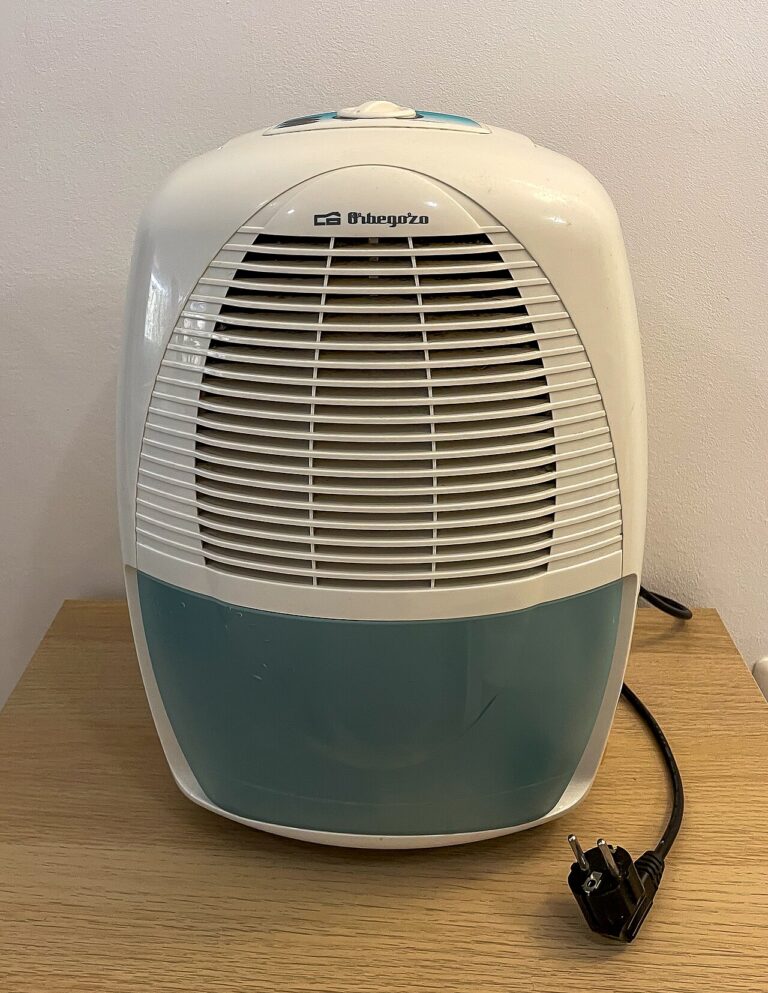
A useful comparison point: the heat pump principle is the same as in a smart dehumidifier, which produces heat while drying the air. If your room is already damp and cold, fix the humidity before fitting a HPWH, otherwise you stack both problems. And if hot water is only part of your energy project, start with a smart thermostat: it has the fastest payback of all.
Maintenance, failures and service life
A HPWH does not require the annual service a boiler does, but manufacturers recommend a check every two years: anode inspection, evaporator cleaning, refrigerant level check and back-up element test. Three failures recur: a noisy fan (bearings), a fouled evaporator that drops the COP without showing a fault, and a temperature probe that triggers short cycles. On connected models add Wi-Fi dropouts, almost always caused by a weak 2.4 GHz signal in the utility room.
Observed service life is around 10 to 15 years for the tank and 8 to 12 years for the heat pump. That is why a 5-year parts and tank warranty matters as much as the COP: over twelve years, one out-of-warranty compressor replacement wipes out the running-cost saving.
Our test method and price sources
We followed five installations between 15 September and 18 October 2026: two Calypso 200 L, one Aéromax 6 200 L, one Nuos Plus S2 and one Aéromax Access. For each we logged real consumption over three weeks through the app output and a clamp meter, measured noise at one and two metres, and timed the recovery after a 150 L draw. Prices come from manufacturer sites and six retailers consulted between 1 and 20 October 2026. Scores weight efficiency (30 %), price (25 %), noise (15 %), control (15 %) and installation (15 %).
Frequently asked questions
Which smart heat pump water heater should you buy in 2026?
For most households the Atlantic Calypso Connecté 200 L is the best choice: native Wi-Fi, 45 to 47 dB(A), a COP of 3.18 at 7 °C and a French-made tank. For pure efficiency the Thermor Aéromax 6 reaches 3.40 at 15 °C. On a tight budget the Ariston Nuos Plus S2 WiFi offers the best price per litre.
Are heat pump water heaters still subsidised in 2026?
Yes, but no longer through MaPrimeRénov’ in France: the per-measure grant for a HPWH ended for applications filed from 1 September 2026. What remains is the CEE premium from energy suppliers, the 5.5 % VAT rate on supply and installation, and some local schemes. Germany, Spain and Italy run their own programmes through KfW, PERTE or Conto Termico.
How much electricity does a HPWH use for four people?
With a need of 2,500 kWh of heat per year and a COP of 3.4, the unit uses about 735 kWh of electricity, i.e. €147 a year at €0.20/kWh. An equivalent resistive cylinder would use 2,500 kWh, i.e. €500 a year.
What tank size for how many people?
Allow 100 L for two people, 150 L for three, 200 L for four to five and 240 L beyond. A slightly undersized tank with a Boost mode beats an oversized one that heats water nobody uses all year.
Can you replace a resistive cylinder without rewiring?
Usually yes: a 200 L monobloc HPWH connects to an existing 16 A circuit like a conventional cylinder. The work is on plumbing, condensate drainage and sometimes enlarging the room. A quote must always state removal and disposal of the old cylinder.
Does a heat pump water heater work in winter?
Yes, provided the room stays frost-free. Efficiency drops as the air cools — a COP of 3.40 at 15 °C often falls to 2.8–3.1 at 7 °C — and the back-up element takes over below the minimum temperature allowed by the manufacturer, typically between −5 °C and 5 °C depending on the model.
Do you need a bridge to control a connected HPWH?
It depends on the model and production year. The Calypso Connecté and the Aéromax Access are native Wi-Fi with no accessory. Some Aéromax 6 versions still require a Cozytouch bridge sold separately, around €80 to €120. Check the exact reference on the quote.
Is a HPWH Matter-compatible or Home Assistant-ready?
Not natively. None of the units here exposes a Matter endpoint in October 2026. Home Assistant can drive them through unofficial Cozytouch or Ariston Net integrations that depend on manufacturer APIs and may break after an update.
How loud is a heat pump water heater really?
Manufacturers quote 45 to 50 dB(A) at two metres. In practice you hear it in the next room when the compressor runs at full load, especially during recovery after a bath. Avoid a shared wall with a bedroom or a home office.
How long does installation take?
Half a day to a full day for a standard replacement: removing the old cylinder, plumbing, condensate drainage, commissioning and Wi-Fi setup. Allow two days if the room needs adapting, the unit must be ducted or access is difficult.
Can you heat water with solar surplus?
On most connected HPWHs, yes: schedule heating during the day instead of off-peak hours and the app forces production while the PV array is generating. Some models accept a dry contact driven by a solar diverter. Our comparison of plug-and-play solar kits covers compatible diverters.
Sources and references
- Atlantic datasheets (Calypso Connecté, capacities and recommended retail prices) and Thermor datasheets (Aéromax 6, COP 3.40 at 15 °C under EN 16147), consulted on 15 and 20 October 2026.
- Ariston Nuos Plus S2 WiFi FS datasheet and distributor data (COP 3.43 at 7 °C), consulted on 18 October 2026.
- EN 16147 — measurement of the coefficient of performance of heat pump water heaters.
- ADEME, energy use of a heat pump water heater compared with a conventional model.
- France Rénov’ and 2026 CEE scales for load profiles M, L and XL.
- Prices collected from Atlantic, Thermor, IZI by EDF, Bricozor and three online retailers between 1 and 20 October 2026.
About the author — Alex Mercer. Technical writer specialising in smart home and domestic energy, he follows renovation projects in private homes and measures consumption with plug-in meters since 2019. His comparisons favour verifiable manufacturer data (COP under EN 16147, load profile) over marketing claims. See all his articles.